Two Kinds of Winter Waterfall: Frozen and Full
Winter does not do the same thing to every waterfall, and that single fact organizes this entire guide. A waterfall's cold-season behavior depends on three variables: how cold the local climate actually gets, how much water the watercourse carries, and whether anything upstream — a dam, a power diversion, a deep snowpack — keeps the supply steady. Get those three straight and you can predict, fairly reliably, whether a given fall will be a curtain of ice, a thundering torrent, or some dramatic combination of the two.
The first kind is the true frozen waterfall: a cold-climate, moderate-volume fall that seizes into ice when sustained sub-freezing temperatures outrun its flow. Keystone Canyon near Valdez, Alaska, is the textbook example. Bridal Veil Falls (slug bridal-veil-falls-ak) and Horsetail Falls (slug horsetail-falls-ak), both tributaries of the Lowe River and listed in our data at 600 and 328 feet, are snowmelt-fed cataracts that run hard in late spring and summer — and then, in winter, congeal into immense ropey curtains of ice that draw climbers from around the world. Local guides and ice-climbing references describe Bridal Veil as a multi-pitch WI4/5 route, which is shorthand for a vertical ice wall hundreds of feet tall. That is the purest definition of a frozen waterfall: the falling water itself becomes the climbable feature.
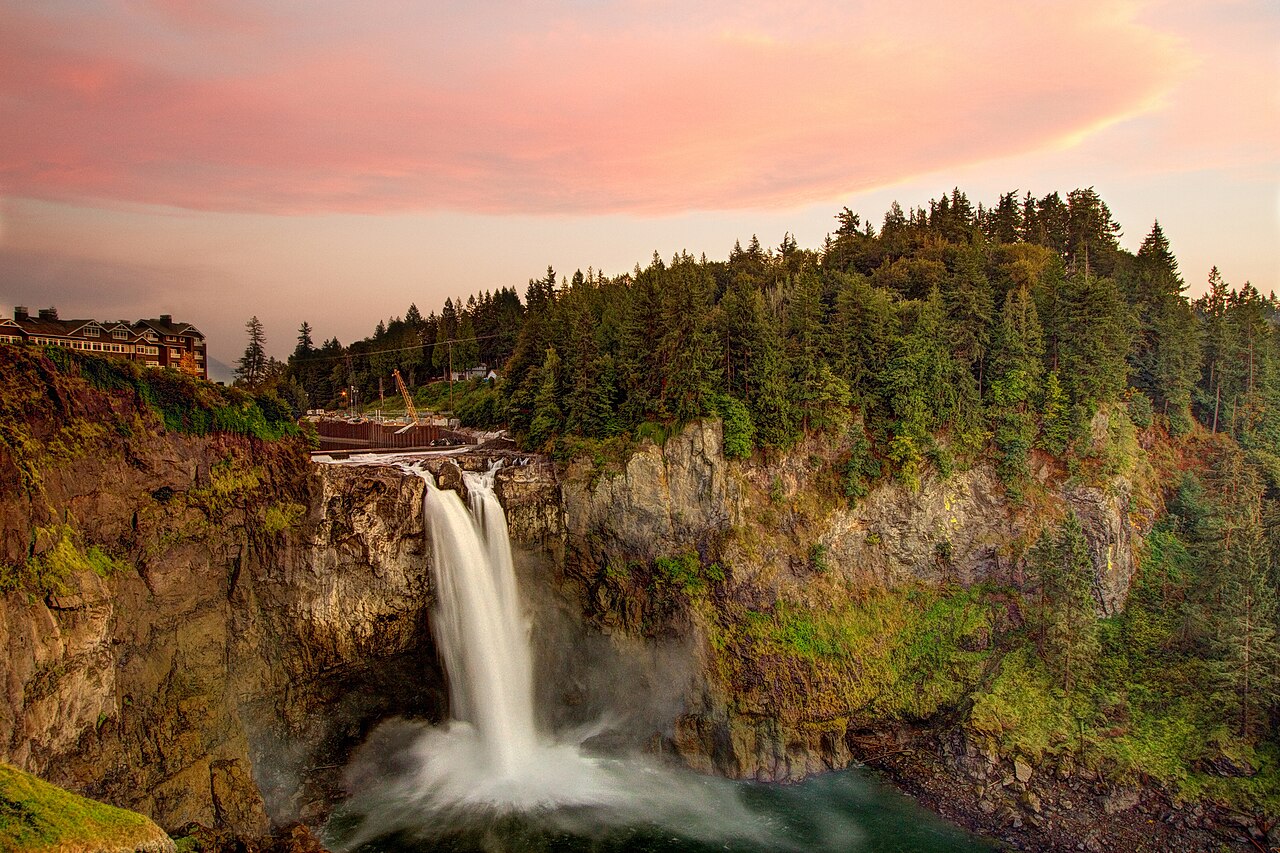
The second kind is the waterfall that simply does not stop. High-volume rivers and dam- or diversion-regulated flows carry too much water and too much thermal energy to freeze solid; instead, winter is often their best season. Snoqualmie Falls (slug snoqualmie-falls-wa), a 268-foot plunge on the Snoqualmie River in Washington, runs year-round in part because its hydroelectric license requires a minimum release over the lip, and its biggest, most thunderous flows arrive with winter and spring rain. These falls do not turn to ice — they put on their loudest show of the year while the air around them frosts. Knowing which category a fall belongs to is the difference between arriving to a wall of ice, a wall of water, or a disappointing trickle behind a frozen veneer.
The Frozen-Solid Tier: Cold-Climate Falls That Turn to Ice
If you want to actually see (or climb) ice, head north and inland, where the climate runs cold enough and long enough to overwhelm the flow. The Valdez falls lead this tier. Both Bridal Veil and Horsetail Falls sit roadside in Keystone Canyon along the Richardson Highway, which means that — road conditions permitting — you can view the frozen formations without a hike, then watch climbers work the ice. Our data lists both as easy roadside access and snowmelt-fed, with winter as their dedicated ice-climbing season. Treat any approach to the ice base as serious terrain: roadside viewing is casual; getting onto or under the ice is a guided, technical undertaking.
Farther east and south, the freeze is real but rarely total. Kaaterskill Falls (slug kaaterskill-falls-ny), a 260-foot tiered fall on Spruce Creek in New York's Catskill Park, largely ices over in a cold winter, and the spectacle of giant icicles and frozen tiers draws a steady stream of hikers up its 1.4-mile, moderate trail. Roaring Brook Falls (slug roaring-brook-falls-ny), a 270-foot tiered fall in the Adirondacks' Giant Mountain Wilderness near Keene Valley, and Nancy Cascades (slug nancy-cascades-nh), a 300-foot tiered fall on Nancy Brook in New Hampshire's White Mountain National Forest, both sit in genuinely cold New England and Adirondack country where ice forms reliably each winter. Note that our data flags Nancy Cascades' best season as late spring through fall — its winter ice is real, but the 5-mile approach gets serious in snow, so it rewards experienced winter hikers, not casual visitors.
Even the giants of the Pacific Northwest occasionally lock up. Multnomah Falls (slug multnomah-falls-or), Oregon's iconic 620-foot tiered fall on Multnomah Creek in the Columbia River Gorge, sometimes partially freezes and, in rare deep cold, can ice over far more dramatically — but the Gorge usually sees more rain than hard freeze, so a fully frozen Multnomah is a genuinely uncommon event rather than an annual one. The honest takeaway for this tier: ice is most reliable in Alaska, the Adirondacks, the Catskills, and the White Mountains, and increasingly a gamble the milder and wetter the local winter climate gets.
The Keep-Running Tier: Falls That Flow Hardest in Winter
Plenty of waterfalls treat winter as peak season, and they make superb cold-weather destinations precisely because you do not have to gamble on a hard freeze. Snoqualmie Falls is the marquee example: a 268-foot roadside plunge near the town of Snoqualmie, Washington, with a paved viewing park, a short 1.4-mile trail option, and easy difficulty. Because its river frequently surpasses the licensed minimum release during the wet, snowmelt-charged winter and spring months, the falls regularly run at impressively high levels from roughly November through May — exactly when many other destinations are at their lowest.
Dam- and lake-regulated falls offer the same reliability for a different reason. Fall Creek Falls (slug fall-creek-falls-tn), a 256-foot plunge on Cane Creek in Tennessee's Fall Creek Falls State Park, keeps a consistent year-round flow thanks to an upstream impoundment, and our data lists its best season as winter and spring after rain (December through April). It does not freeze solid in Tennessee's milder cold; instead, ice drapes the surrounding cliff like chandeliers while the main column keeps pouring. The overlook gives you a dramatic view with almost no hiking, while the roughly three-quarter-mile base-of-the-falls trail is rated strenuous and turns treacherous when iced — an important split for winter planning.
Two Washington falls bridge the categories. Wallace Falls (slug wallace-falls-wa) and its middle drop (slug wallace-falls-middle-falls-wa), tiered falls on the Wallace River in Wallace Falls State Park near Gold Bar, flow year-round with their biggest volume in spring. They make a solid winter outing — moderate, roughly 5.6 miles round trip — but expect a running waterfall framed by ice and snow rather than a frozen column, and expect the trail's wet, rooty, switchbacked sections to demand traction. The pattern holds across the Cascade and Coast ranges: the higher the average winter volume, the more likely you are looking at a powerful cold-weather torrent rather than a sheet of ice.
Big Falls That Winter Locks Away Behind Snow
Some of the country's most spectacular cold-season waterfalls are also among the hardest to reach in winter — not because the falls disappear, but because the roads to them close. Lower Yellowstone Falls (slugs lower-yellowstone-falls-wy and lower-falls-of-the-yellowstone-river-wy), the 308-foot plunge of the Yellowstone River into the Grand Canyon of the Yellowstone in Wyoming, is the headline case. Its peak flow is late-spring runoff in May and June, but in winter the canyon transforms into a frosted, partially frozen scene of enormous beauty. The catch is access: most interior Yellowstone roads close to regular traffic from roughly mid-November through April, so winter visitors reach the Canyon area only by guided snowcoach, snowmobile, or on skis or snowshoes — never by simply driving up.
Glacier National Park's high country tells a similar story from the other direction. Bird Woman Falls (slug bird-woman-falls-mt), a 560-foot horsetail tributary of Logan Creek in Montana, is best viewed from the Going-to-the-Sun Road during the late-spring snowmelt of June and July — and that road is buried and closed across its high stretches all winter. In the cold months the fall is effectively out of reach for ordinary visitors, a reminder that 'best in winter' and 'reachable in winter' are not the same claim. When a high-elevation fall peaks on snowmelt, its most dramatic moment usually coincides with the season you cannot drive to it.
The lesson for trip planning is to separate the waterfall's behavior from its accessibility. A fall can be at its most photogenic in deep winter and still require a four-figure guided oversnow trip — or a multi-day ski tour — to witness. Before committing to any high-country winter waterfall, check the managing agency's current road status (NPS for Yellowstone and Glacier, state parks elsewhere) rather than the calendar, because seasonal closures, late openings, and storm closures routinely override the textbook season.
Staying Alive on Icy Trails and Under Ice-Hung Cliffs
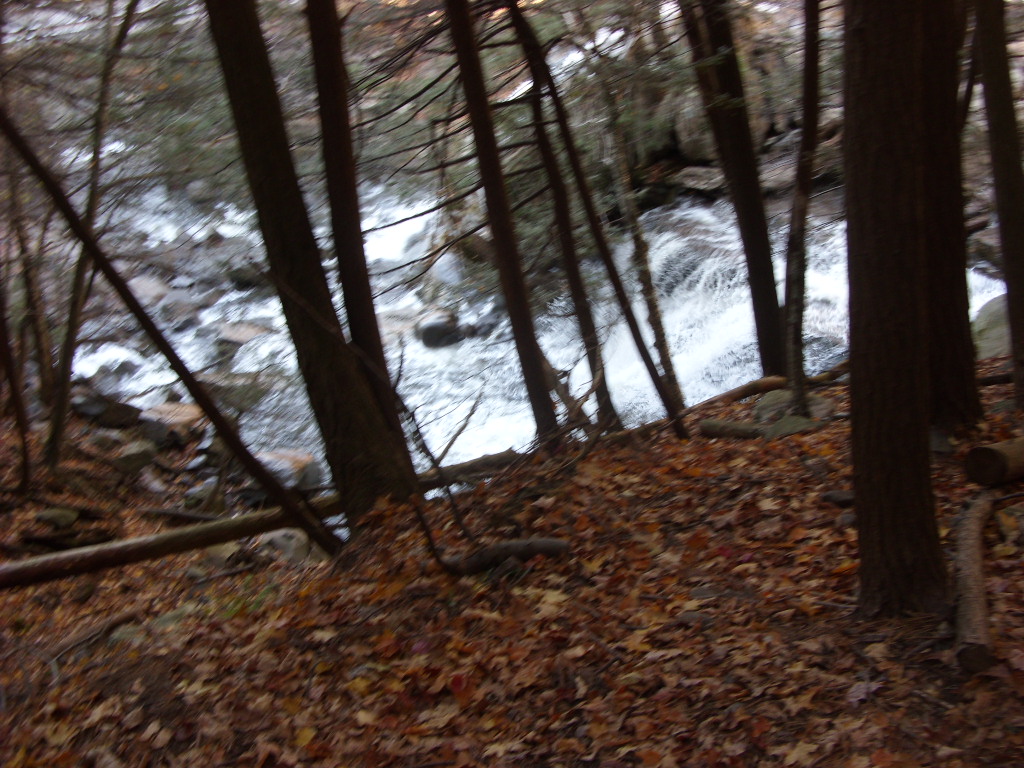
Winter waterfalls are beautiful and genuinely dangerous, and the danger comes in two distinct flavors. The first is the trail itself. Packed snow over wet rock, refrozen meltwater, and steeply inclined snowpack turn ordinary paths into slides — and waterfall trails almost always involve drop-offs without railings. Microspikes or a similar traction device are not optional gear on icy waterfall trails; they are the baseline. Deep, fresh powder calls for snowshoes instead, and trekking poles add a critical point of balance on slick descents to plunge pools. Trails that are merely moderate in summer, like the routes to Kaaterskill or Wallace Falls, become legitimately strenuous once iced.
The second hazard is overhead. Frozen waterfalls and the cliffs around them shed ice without warning, and the base of an ice-draped fall is exactly where people stand for photos. This is not a hypothetical risk: in one documented incident at Kaaterskill Falls, two hikers were struck and injured by a chunk of ice that fell from the falls in mid-afternoon. The New York State DEC's standing guidance for icy waterfalls is blunt — wear traction, stay aware of overhead ice, and keep your distance from the base. If the trail forces you close to a frozen fall, a climbing helmet is reasonable, and lingering directly beneath an ice curtain on a warming afternoon is the single worst thing you can do.
Beyond gear, winter waterfall trips reward conservative planning. Daylight is short, temperatures swing, and the very ice you came to see is most likely to release as the sun hits it. Go with a partner, leave a detailed trip plan with someone you trust, and check current trail and road conditions with the managing agency before you leave — winter trails are frequently unmaintained, and the official source will know about closures, avalanche terrain, and recent ice falls that no calendar can tell you. For roadside falls like the Valdez ice climbs, Snoqualmie, or the Fall Creek Falls overlook, you can scale your ambition to the conditions and still see something spectacular from solid ground.
Finally, respect the difference between viewing and climbing. The frozen curtains of Keystone Canyon are world-class ice routes, and people travel far to climb Bridal Veil and Horsetail Falls — but that is roped, technical mountaineering with avalanche and ice-collapse exposure, done with guides and proper equipment. Admiring those formations from the highway pullout is a different activity entirely, and for the vast majority of winter visitors it is the right one.