Why Tennessee Is a Waterfall State
Tennessee earns its reputation for waterfalls from geography, not luck. The Cumberland Plateau — a broad, flat-topped tableland of erosion-resistant sandstone capping softer rock beneath — covers much of the state's middle. Where streams reach the plateau's edge, they pour off cliff lines into gorges, and the hard caprock keeps those lips sharp and the drops vertical. That is the recipe behind clusters like the falls of Fall Creek Falls State Park and the South Cumberland region. In the east, the older, steeper terrain of the Great Smoky Mountains and the Cherokee National Forest produces a different style of waterfall: long tumbling cascades stepping down mountain creeks rather than single clean plunges.
This guide is a curated selection, not an inventory. Tennessee has hundreds of named and unnamed waterfalls, and Fall Creek Falls State Park alone documents six falls within its boundaries. What follows are fourteen well-documented falls — spanning roadside pull-offs, short paved-and-stepped walks, and serious all-day backcountry hikes — chosen because each is publicly accessible, managed by a state park, the National Park Service, or the U.S. Forest Service, and genuinely rewarding to reach. The order moves roughly from the tallest and most famous toward more specialized trips.
One honest caveat runs through every entry: reported waterfall heights vary by source and by what is being measured. A single vertical free-fall is straightforward, but a multi-tier cascade can be quoted as one drop, a sum of drops, or the full elevation lost from crest to pool. The figures here come from the underlying field-guide data and are cross-checked against the managing agency where possible, but treat them as well-supported estimates rather than surveyed certainties. Where the type of fall (plunge, cascade, tiered, horsetail, segmented) matters to the number, it is noted.
The Marquee Falls of the Cumberland Plateau
Fall Creek Falls (slug fall-creek-falls-tn) is the headliner and the obvious place to start. At a documented 256 feet, this single plunge on Cane Creek is widely cited as the highest free-falling waterfall in the eastern United States, and it anchors Fall Creek Falls State Park near Spencer. You can see it from a railed overlook with almost no effort, but the rewarding visit is the steep 0.7-mile trail down to the plunge pool at the base — short in distance, strenuous in grade, and a real climb on the way back out. It runs most dramatically in winter and spring, roughly December through April, after rain recharges Cane Creek; in a dry late summer it can thin to a ribbon.
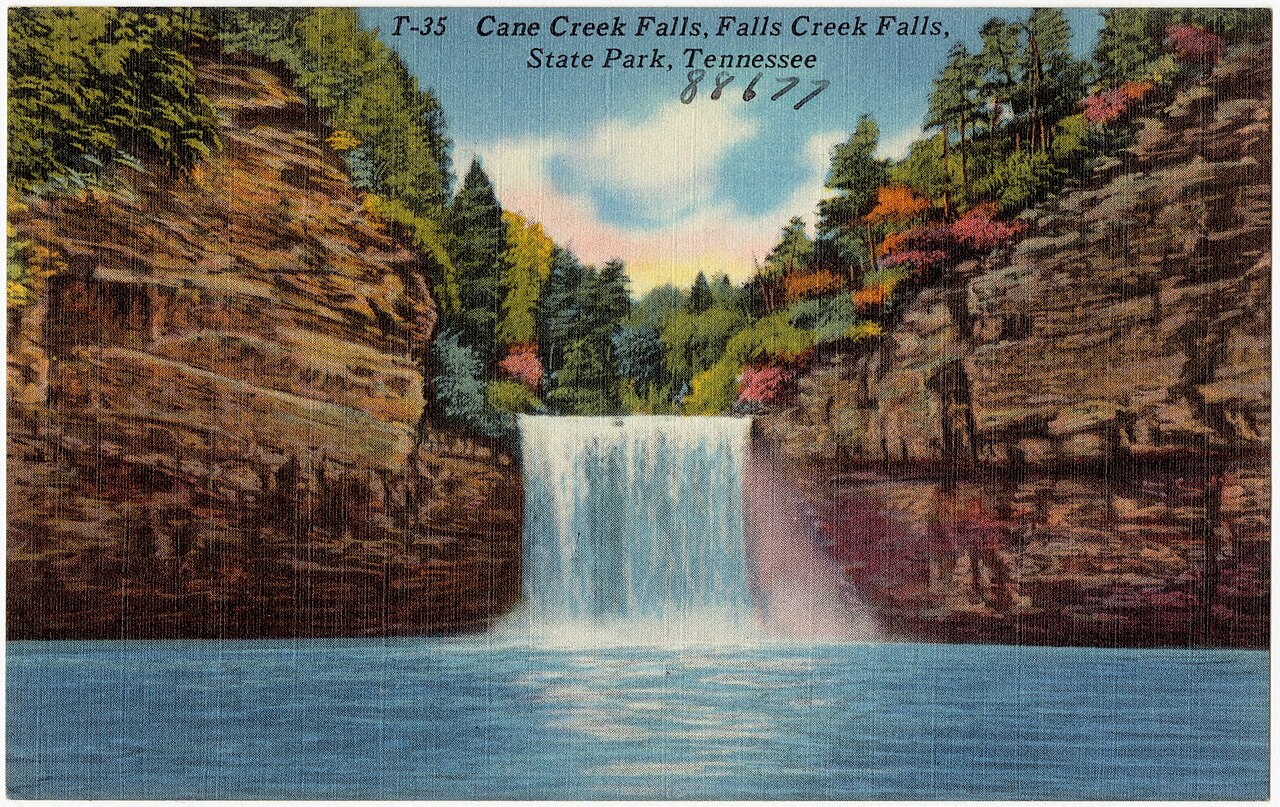
The same park holds Cane Creek Falls (slug cane-creek-falls-tn), an 85-foot plunge on the same Cane Creek a short, easy walk from the nature center near the park's main developed area. Because it shares a watershed with its taller neighbor, its best flow follows the same calendar — late winter through spring carries the highest water. Pairing the two is the efficient way to see the park's signature drops in a single visit, and the contrast between the towering main falls and the broader, closer Cane Creek Falls is instructive in how the plateau's geology produces such different shapes from the same creek.
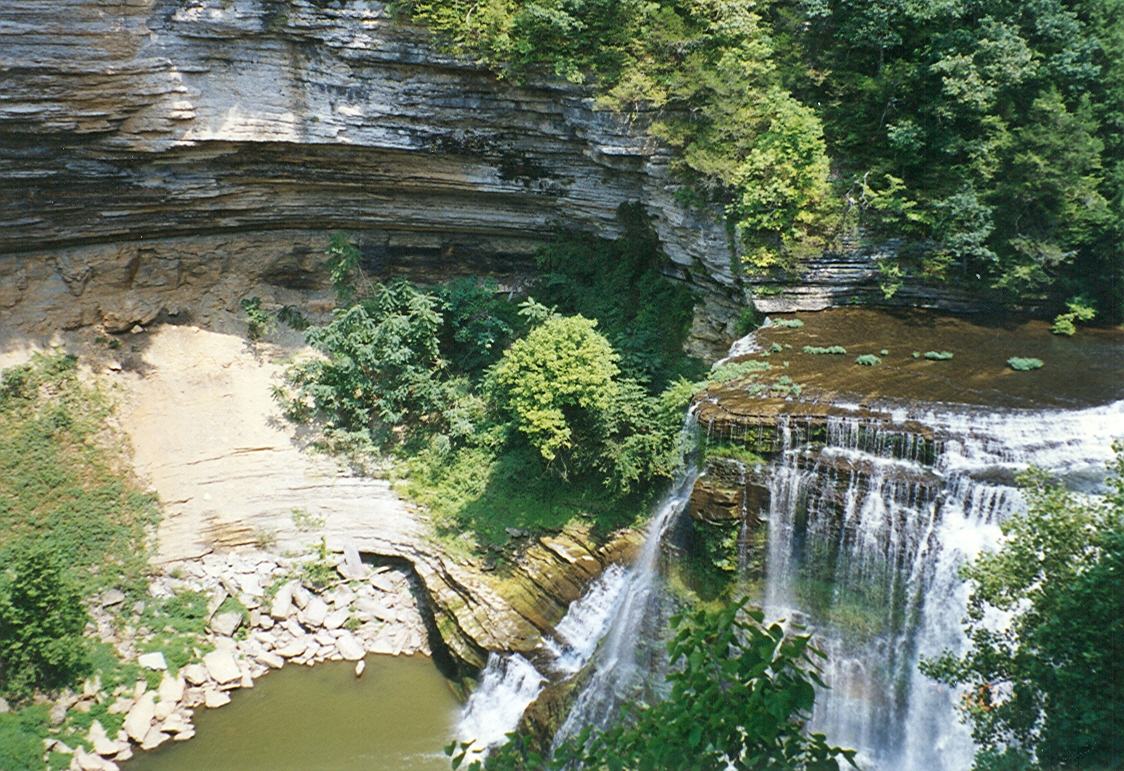
Nearby on the Falling Water River, Burgess Falls (slug burgess-falls-tn) is a powerful 136-foot cascade in Burgess Falls State Park near Sparta. The roughly 1.3-mile trail to the main overlook is moderate and passes several smaller falls along the way, building toward the finale, so the walk itself is part of the payoff. Spring brings the strongest flow, but the river carries water year-round, making Burgess one of the more reliable big falls when the seasonal plateau creeks are running low.
Cummins Falls (slug cummins-falls-tn) near Cookeville is a 75-foot tiered waterfall on Blackburn Fork and one of Tennessee's most popular swimming holes — which is also why it demands the most caution on this list. Reaching the base means a moderate hike of about 2.5 miles round trip that includes wading and rock scrambling in the gorge, and the state park now requires a Gorge Access Permit (purchased online in advance) for that lower section. The gorge is genuinely prone to flash flooding; access is restricted to fair weather, the area is evacuated when rain falls anywhere in the watershed, and life vests are required for younger children. Spring is the best season for flow. Respect the closures here — they exist because people have drowned.
Roadside and Short-Walk Falls
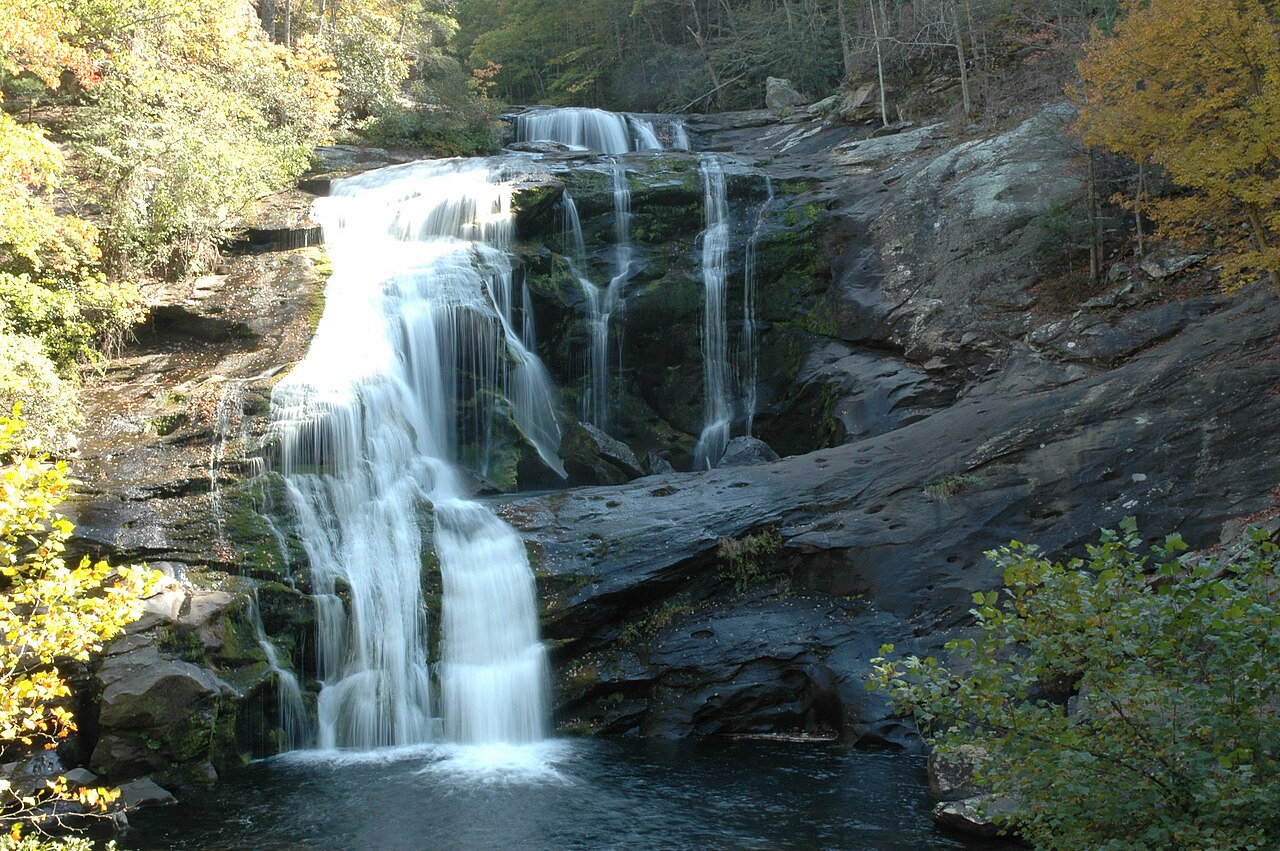
Not every great Tennessee waterfall asks for a hard hike. Bald River Falls (slug bald-river-falls-tn), a roughly 90-foot cascade on the Bald River in the Cherokee National Forest near Tellico Plains, is the state's premier drive-up waterfall: the river pours under a Forest Service road bridge, and you can take in the entire fall from the span itself without any real walking. Reported heights for it range from about 80 to 100 feet depending on the source, reflecting how a stepped cascade resists a single clean number. It shows best in winter and spring when the river is full, and its easy access makes it a natural anchor for a Cherokee National Forest day trip.
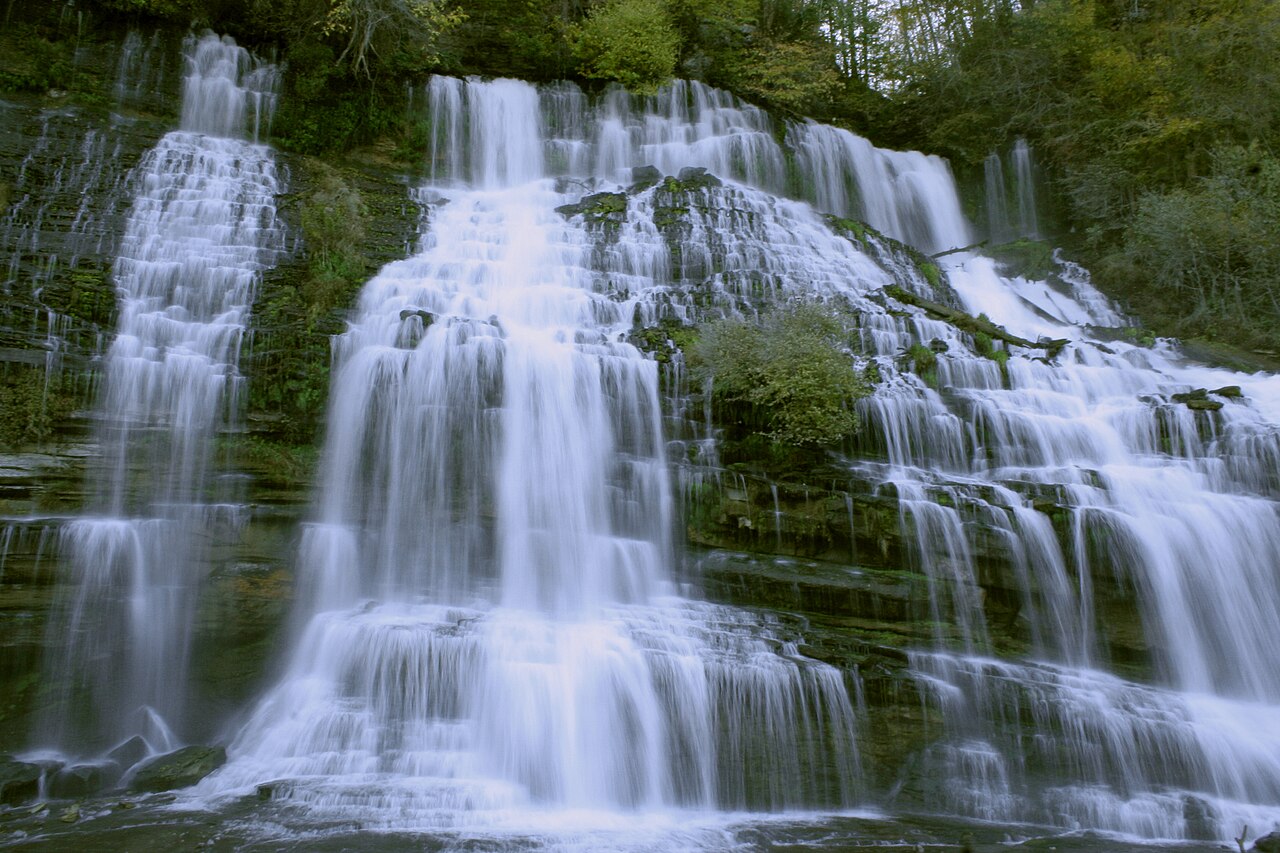
Rock Island State Park near the town of Rock Island holds two contrasting falls. Twin Falls (slug twin-falls-tn and slug twin-falls-rock-island-tn) is a striking roughly 80-foot horsetail that emerges directly from the gorge wall — its water is seepage from the Collins River finding its way through the rock and bursting out of the cliff face, an unusual origin that makes it look like the cliff itself is leaking a waterfall. Because its flow depends on groundwater and on dam releases along the Caney Fork system, it is less predictable than a free-flowing creek; spring is the general best bet, but conditions vary with the dam. The short trail to viewpoints is on the order of a mile and a half round trip.
Foster Falls (slug foster-falls-tn) in the South Cumberland region near Tracy City is a clean 60-foot plunge on Little Gizzard Creek, reachable by an easy walk of roughly 0.6 miles to the overlook and base. It is a popular spot with rock climbers, who work the surrounding bluff lines, and it runs best in winter and spring. Its modest trail distance and dramatic single drop make it one of the better introductions to South Cumberland's waterfall country for visitors who want maximum payoff for minimal effort.
South Cumberland and the Middle Tennessee Cascades
The South Cumberland State Park complex and its natural areas pack several worthwhile falls into a compact stretch of plateau. Greeter Falls (slug greeter-falls-tn) on Firescald Creek near Altamont is a 50-foot plunge reached by a moderate trail of about 1.2 miles. The trail is well known for a spiral metal staircase that drops hikers into the gorge, and the route continues to a lower fall, Greeter Falls (Lower) (slug greeter-falls-lower-tn), a second 50-foot drop on the same creek within the Savage Gulf area. Visiting both on one out-and-back is the standard way to do it; winter and spring carry the strongest flow, and the upper fall's pool draws swimmers in warm weather.
Farther west, in Short Springs State Natural Area near Tullahoma, Machine Falls (slug machine-falls-tn) is a wide, photogenic 60-foot cascade on Machine Falls Branch. The loop to reach it is a moderate hike of roughly 1.6 miles through hardwood forest, and like most middle-Tennessee falls it is at its best in winter and spring when the small branch is full — in dry months it can shrink considerably, so timing matters more here than at the larger, more reliable rivers. Short Springs is a quieter alternative to the busier state parks and a good destination for a half-day trip from Nashville or Chattanooga.
These middle-Tennessee falls illustrate a useful planning principle for the whole state: the smaller the watercourse, the more its character depends on recent rain. Machine Falls Branch, Firescald Creek, and Little Gizzard Creek are creeks, not rivers, so they swell impressively after a wet spell and dwindle in drought. If you are driving any distance for one of them, a visit in the wetter December-to-April window — ideally a day or two after meaningful rain — is far more likely to deliver the postcard view than a trip in a dry August.
The Backcountry Rewards: Smokies and Beyond
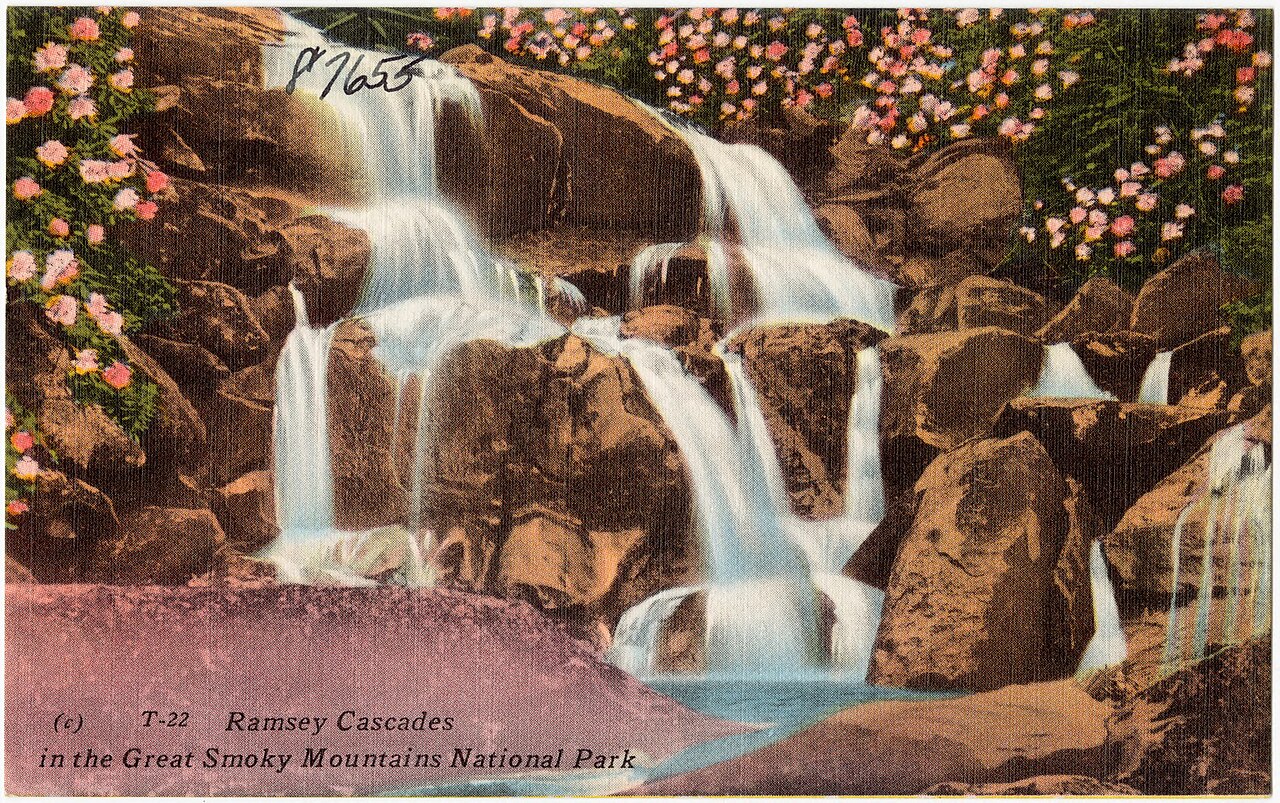
The most demanding falls on this list are also among the most memorable. Ramsey Cascades (slug ramsey-cascades-tn) in Great Smoky Mountains National Park near Gatlinburg is the tallest waterfall in the park, with water dropping roughly 100 to 105 feet over a series of rock outcroppings on Ramsey Prong. Earning it takes an 8-mile round-trip hike rated strenuous, climbing well over 2,000 feet, with the final mile turning steep, rocky, and root-strewn. The reward beyond the falls is the route itself, which passes through some of the largest old-growth forest remaining in the Smokies. Spring and fall are the prime seasons. The rocks at the base are notoriously slick — every year people are injured trying to climb them, so the falls are best admired from solid footing.
Also in the Smokies, Rainbow Falls (slug rainbow-falls-tn) is an 80-foot plunge on LeConte Creek, the tallest single-drop waterfall in the park. The trail runs about 5.4 miles round trip and is strenuous, climbing steadily toward Mount LeConte; on sunny afternoons the spray can throw the rainbow that gives the fall its name, and in hard winters the spray builds dramatic ice formations. Because LeConte Creek runs year-round, Rainbow Falls is a reliable destination in any season, though flow and the rainbow effect are best when the creek is full and the sun is right.
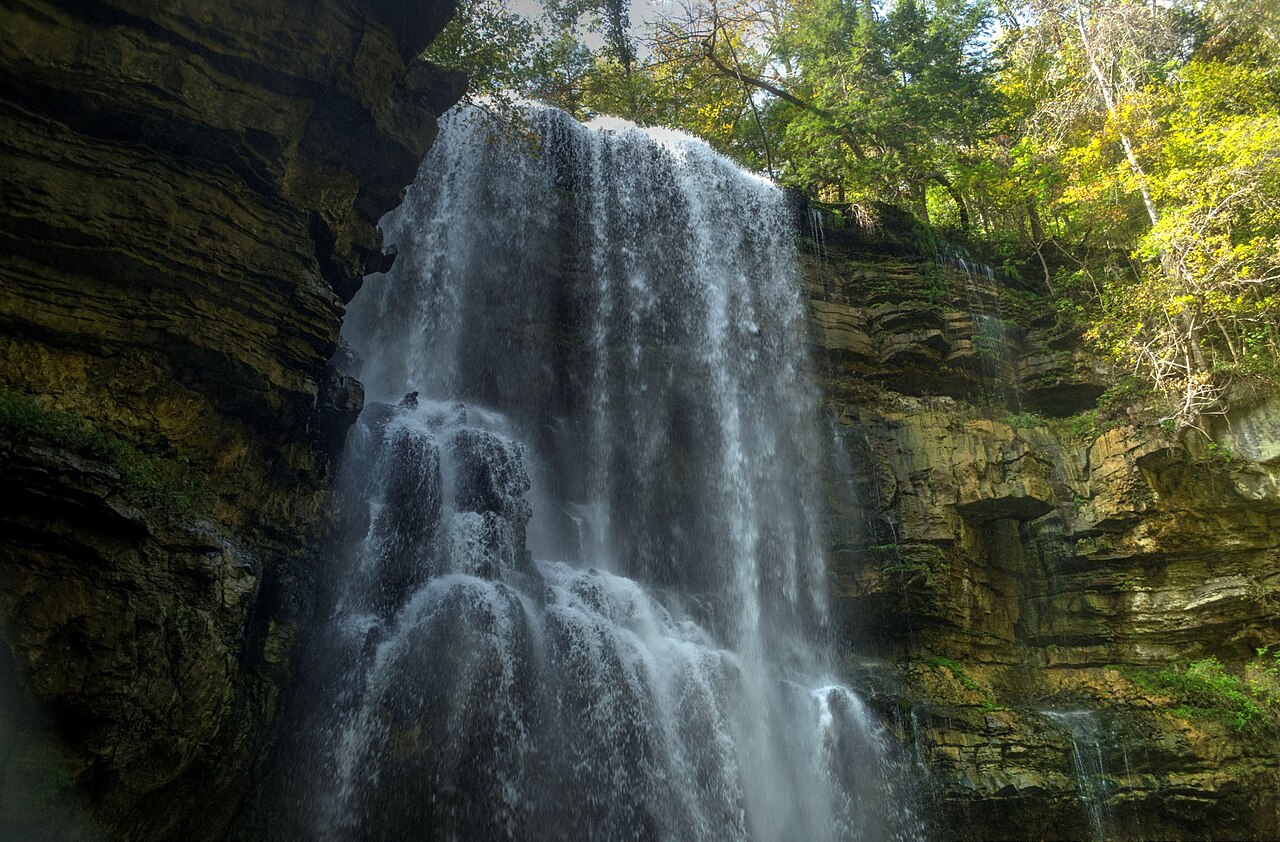
Back on the Cumberland Plateau, Virgin Falls (slug virgin-falls-tn) is the connoisseur's trip: a 110-foot plunge in a state natural area near Sparta, fed by a stream that emerges from a cave at the top of the fall and disappears back underground into a sinkhole at the bottom — water that falls from a cave and vanishes into the earth. Reaching it is a strenuous backcountry hike of roughly 9 miles round trip, passing several other falls along the way, and it runs best in winter and spring after rain. This is a full-day outing that demands real preparation, good footwear, and water, but the geology — a waterfall with no visible source or outlet — is unlike anything else on this list.
Taken together, these backcountry falls are a different commitment from the roadside and short-walk options earlier in this guide. Each asks for several hours, sturdy footwear, and a check of conditions and park alerts before you go — trail closures, bear activity in the Smokies, and recent rain all matter. But they are also where Tennessee's waterfalls feel least like attractions and most like discoveries, and for hikers willing to put in the miles, they are the ones worth planning a whole day around.