How to use this guide
Kentucky is not the first state most people picture when they think of waterfalls, but the Cumberland Plateau in the southeastern third of the state hides hundreds of them. Water cutting through the region's layered sandstone has carved a landscape of plunges, cascades, rock houses, and natural arches, and a large share of the best falls sit inside three adjoining public lands: the Daniel Boone National Forest, the Big South Fork National River and Recreation Area, and Cumberland Falls State Resort Park. That public ownership is good news for visitors, because it means maintained trails, signed trailheads, and falls that will look the same on your trip as they do in the photos.
This is a curated selection of ten documented waterfalls, not an attempt to catalog every drop in the state. We ordered them roughly from tallest to shortest, because height is the single most reliable fact we can anchor to, but height alone is a poor proxy for whether a fall is worth your time. A 113-foot wet-weather curtain that barely runs in August can be less rewarding than a 68-foot block that thunders year-round. Where it matters, we say so.
One honest caveat about the numbers you'll see throughout: reported waterfall heights vary by source and by measurement method. A single clean plunge is easy to measure; a multi-tiered cascade is not, and different surveyors disagree on where the fall starts and stops. Flat Lick Falls, for example, is described as 28 feet by some sources and 33 feet by others. Treat every height here as a good documented estimate rather than a surveyed certainty, and treat the trail mileages — which we drew from land-manager and trail-database listings — the same way, since alternate trailheads can change a hike's length substantially.
The tall plunges: Yahoo Falls and Anglin Falls
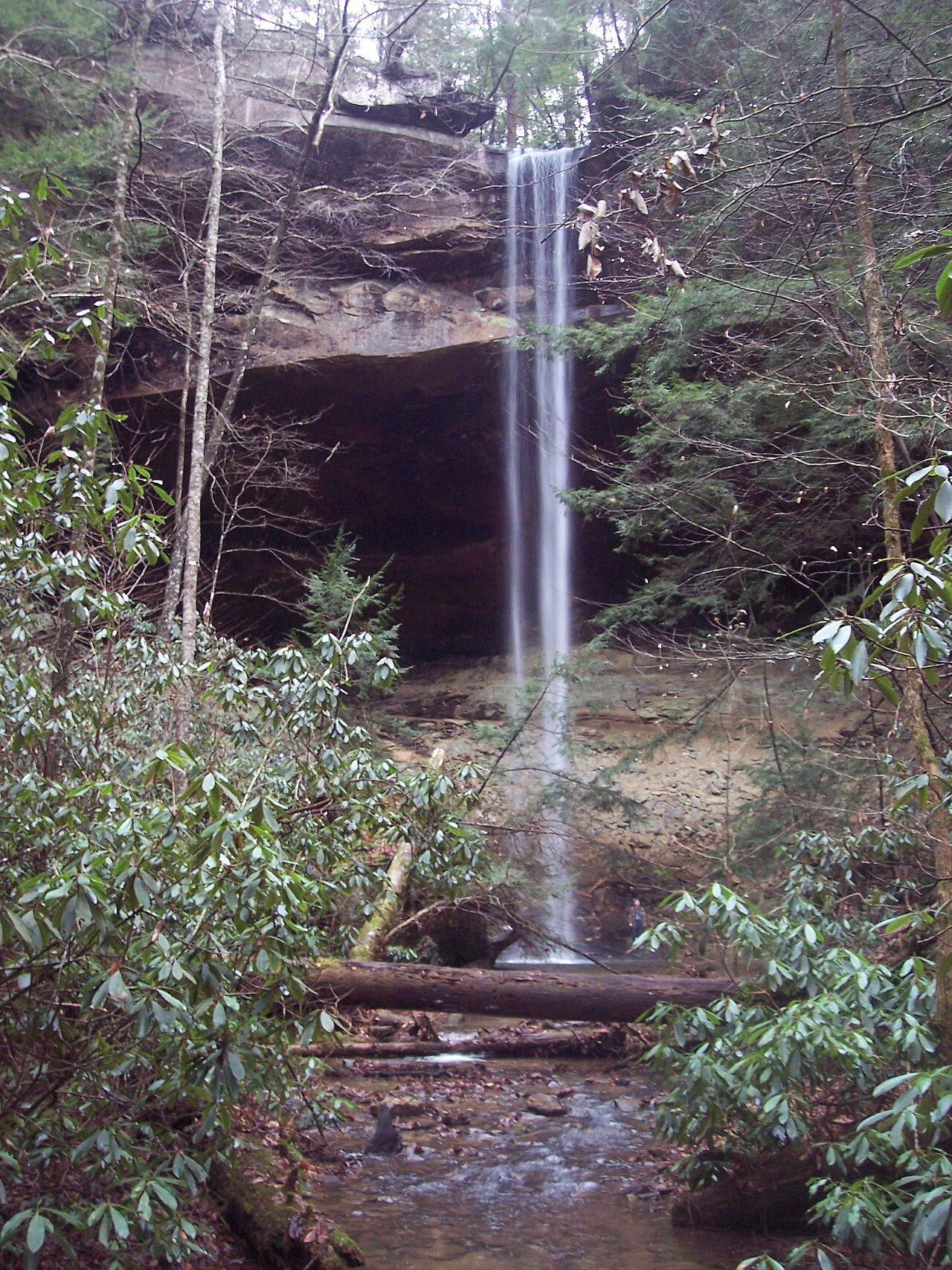
Yahoo Falls (slug: yahoo-falls-ky), at roughly 113 feet, is the tallest waterfall in Kentucky and the natural headline act of this list. It drops over Yahoo Creek inside the Big South Fork National River and Recreation Area, which the National Park Service administers, in the southwestern corner near Marshes Siding. The plunge spills in front of one of the area's largest rock houses — a sweeping sandstone overhang — and a short loop of about a mile lets you descend to the creek bottom, walk to the base, and even pass behind the falling water. The trail is rated moderate but its brevity keeps it accessible. Because Yahoo is fed by a relatively small drainage, it's a winter-and-spring fall above all: go after a wet stretch, when the volume justifies the height. Many visitors tack on the spur to nearby Yahoo Arch, a roughly 100-foot natural arch, which adds meaningful distance to the day.
Anglin Falls (slug: anglin-falls-ky) is the tallest fall on this list that sits outside the southern Cumberland River country. At roughly 75 feet, it plunges over Anglin Branch in a wooded gorge near Berea, protected within the John B. Stephenson Memorial Forest State Nature Preserve, a property owned by Berea College and managed for conservation. The preserve is named for a former Berea College president who spent his final years campaigning to protect the ravine, and the site shelters hundreds of native plant species and a celebrated spring wildflower display alongside the falls.
Anglin is the textbook wet-weather waterfall, and that single fact should govern when you visit. In a dry summer it can be a trickle or nothing at all; after winter or spring rain it becomes a tall, delicate ribbon. The foot trail to the base runs roughly 1.7 miles and is best described as moderate over uneven terrain, gaining ground as it climbs the ravine. Before planning a trip, check current access: nature preserves periodically close sites like this for restoration work, and Anglin has been subject to such closures, so confirm the preserve is open before you drive.

The flagship: Cumberland Falls and Eagle Falls
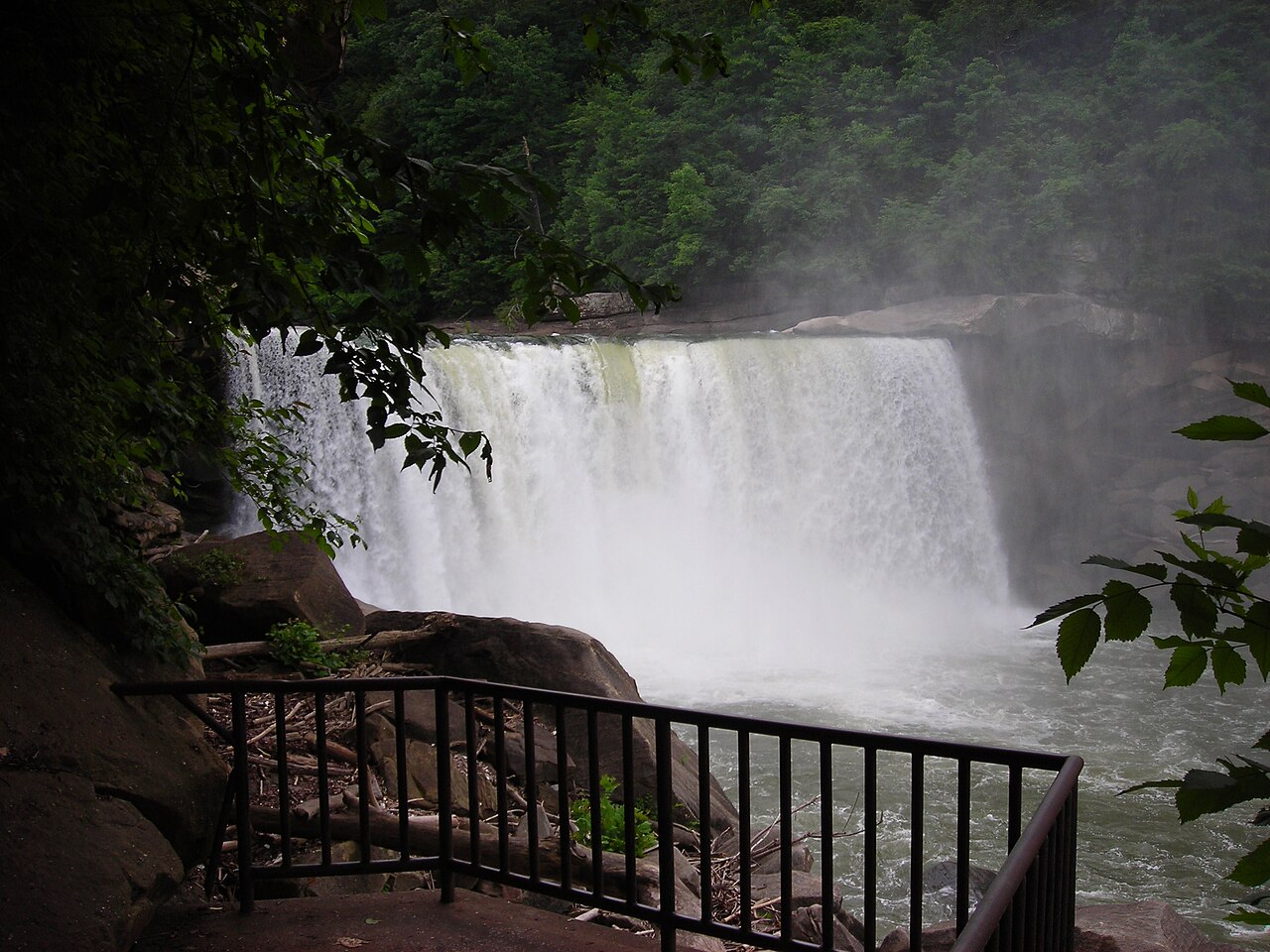
If this list has a single must-see, it is Cumberland Falls (slug: cumberland-falls-ky). At roughly 68 feet tall and around 125 feet wide, this broad block waterfall on the main Cumberland River earned the nickname 'Niagara of the South,' and it is the rare Kentucky fall that runs hard year-round because it drains an entire river rather than a seasonal creek. It anchors Cumberland Falls State Resort Park, run by Kentucky State Parks near Corbin, with paved overlooks within steps of the parking area — the easiest, most reliable big-water experience in the state.
Cumberland Falls's signature is the moonbow. On clear nights around the full moon, mist rising from the plunge bends moonlight into a faint lunar rainbow. The site is widely cited as the only place in the Western Hemisphere where this phenomenon appears predictably, which makes a full-moon evening a genuinely distinctive reason to time a trip — though, like the falls themselves, the moonbow shows best when flow is high in winter and spring. Check the park's published moonbow calendar and clear skies before counting on it.
Just downstream, Eagle Falls (slug: eagle-falls-ky) offers the more athletic counterpart. Eagle Creek, a tributary, drops about 44 feet onto rocks along the Cumberland River shoreline, and the only route there is the Eagle Falls Trail, listed at roughly 1.8 miles round trip with several hundred feet of elevation change. Reviews consistently call it the harder side of moderate — much of it is stairs and cliff-edge walking — and it rewards the effort with one of the best side-on views of Cumberland Falls along the way. A few practical notes worth respecting: the trailhead is just past the Cumberland Falls bridge on KY 90, the cliff lines demand caution with children, and dogs are not permitted on this trail. Eagle runs best in spring at peak flow.
Daniel Boone backcountry: Vanhook, Bark Camp, and Dog Slaughter
The Daniel Boone National Forest, managed by the U.S. Forest Service, is where Kentucky waterfalling turns into real hiking. Vanhook Falls (slug: vanhook-falls-ky) is one of the iconic landmarks of the Sheltowee Trace, the forest's long-distance trail, and it plummets roughly 40 feet in a thin stream onto boulders near London. Our listing puts the round-trip distance at about 5.4 miles, though shorter approaches from the Sheltowee Trace KY 192 trailhead are commonly cited — another reminder to confirm your exact route, because the same fall can be a long day hike or a moderate out-and-back depending on where you park. Vanhook flows much of the year but shows best after a few days of consistent rain, and the corridor leading to it is studded with smaller off-trail cascades and an arch worth detouring for.
Bark Camp Creek Cascades (slug: bark-camp-creek-cascades-ky) trades a single big drop for a graceful set of three. Reaching about 25 feet of combined fall, the cascades step over wide rock ledges and boulders near where Bark Camp Creek meets the Cumberland River, close to Corbin. Bark Camp Trail #413 follows the creek for roughly 5 miles round trip on a moderate grade, passing under rock shelters and cliffs and meeting the Sheltowee Trace near the cascades; the creek is stocked with rainbow trout, so expect anglers. Like the rest of this trio, it's a winter-and-spring fall, most photogenic when the creek is full.
Dog Slaughter Falls (slug: dog-slaughter-falls-ky) is the most popular of the three and, at roughly 15 feet, the shortest — a wide, photogenic cascade where Dog Slaughter Creek tumbles toward the Cumberland River. Its grim name traces to local lore rather than anything you'll see on the trail. The standard hike runs about 2.5 miles round trip on a moderate route lined with rhododendron tunnels, seasonal side cascades, and a short scramble to the base; a newer Forest Service trailhead created to ease overcrowding lets you choose between a short approach and a much longer day hike, so check which lot you're starting from. It runs best in winter and spring, and in a hard freeze the falls can ice over dramatically.
Easy wins and a hidden gem: Flat Lick, Princess, and Lick Creek Falls
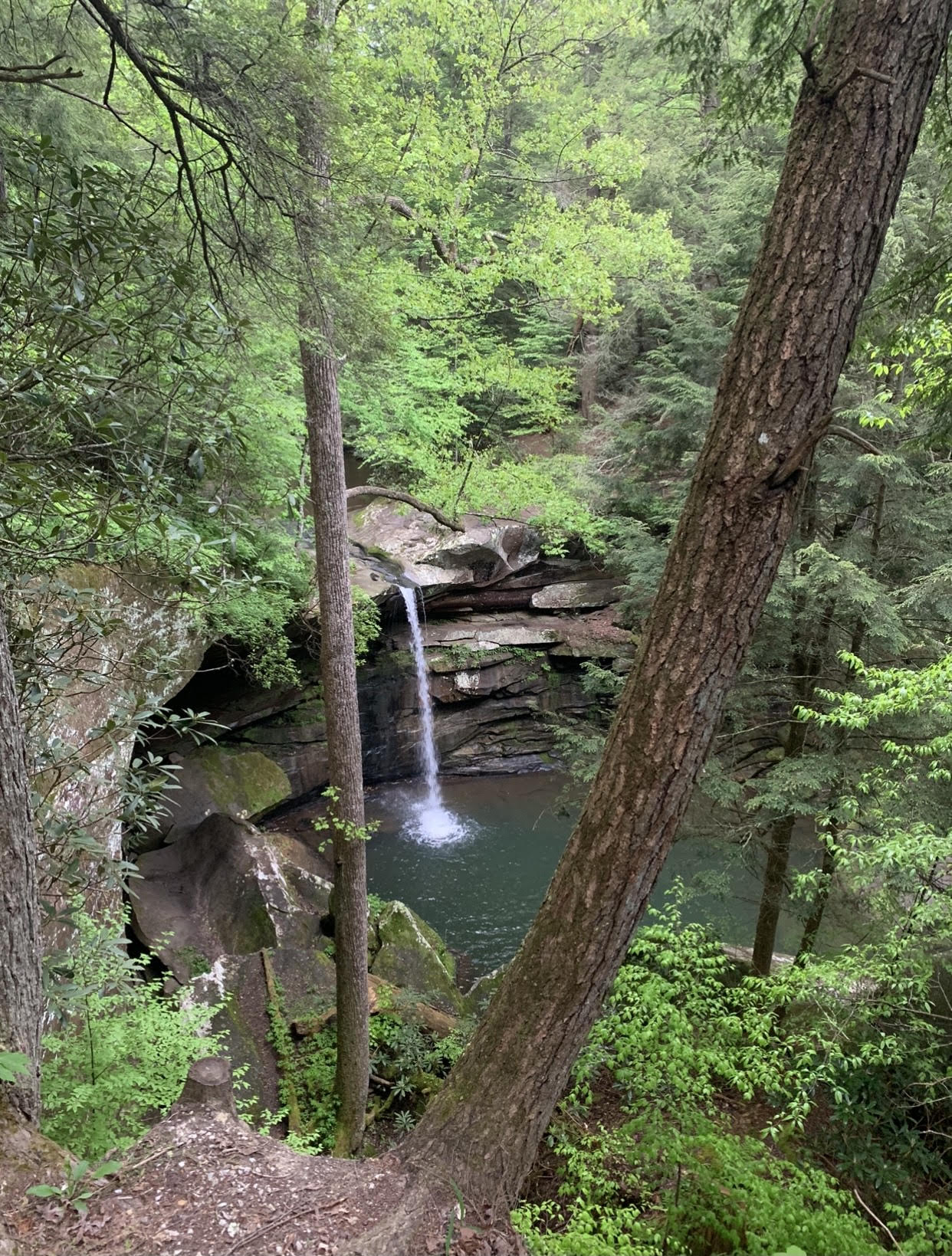
Flat Lick Falls (slug: flat-lick-falls-ky) is the most family-friendly stop on this list. Reported at roughly 33 feet (some county sources say 28 — a clean example of how heights drift between references), this plunge on Laurel Fork Creek anchors a small county-managed recreation area near Gray Hawk in Jackson County, with primitive camping, a picnic shelter, and restrooms across more than 85 acres. A short loop of about a mile leads to the falls, and a paved path reaches a wheelchair-accessible viewing platform — a genuine rarity among Kentucky falls. The deep pool below draws waders and swimmers, but note the posted warning: jumping from the falls is prohibited and has proven dangerous. Best flow comes in winter and spring.
Princess Falls (slug: princess-falls-ky) is a wide, roughly 20-foot creek cascade on Lick Creek inside the Big South Fork country near Stearns, reached on an easy hike of about 2.6 miles round trip from the Yamacraw area. The trail follows Lick Creek and parallels the Cumberland River past smaller falls and rock formations with very little elevation change, which makes it one of the better waterfall walks in the state for young or casual hikers. Folklore ties the name to Princess Cornblossom, a figure of local Cherokee legend. It runs best in winter and spring.
Lick Creek Falls (slug: lick-creek-falls-ky) is the connoisseur's pick and the one fall here we won't assign a height to — our source data lists it as undocumented, and the reliable accounts simply describe it as notably tall but set on a small tributary, meaning it only looks its best in high water. That makes it the most flow-dependent stop in this guide: time it wrong and you'll find a damp wall of rock. The plunge sits off the Lick Creek Trail near Stearns, with our listing putting the full outing around 5.2 miles, often combined with Princess Falls into a single longer day. For waterfall chasers willing to commit to a wet-weather window and a longer hike, it's a quietly spectacular payoff — and a fitting note to end on, because it captures what waterfalling in Kentucky really demands: the right season, a willingness to walk, and patience with numbers that no two sources fully agree on.