Why the Sierra Nevada Makes Big Waterfalls
The Sierra Nevada is a single, tilted block of granite roughly 400 miles long, lifted along its eastern edge and worn down on its western slope by rivers and, repeatedly, by glaciers. That geology is the whole story behind the range's waterfalls. When Pleistocene glaciers ground down the main canyons of Yosemite, the Kaweah, and the Merced, they cut the floors far deeper than the smaller tributary valleys feeding in from the side. When the ice retreated, those tributaries were left stranded high on the canyon walls — 'hanging valleys' whose creeks now have no choice but to leap. Yosemite Falls, Bridalveil Fall, Wapama Falls, and Tueeulala Falls are all classic hanging-valley waterfalls, water spilling off a lip that a glacier left behind.
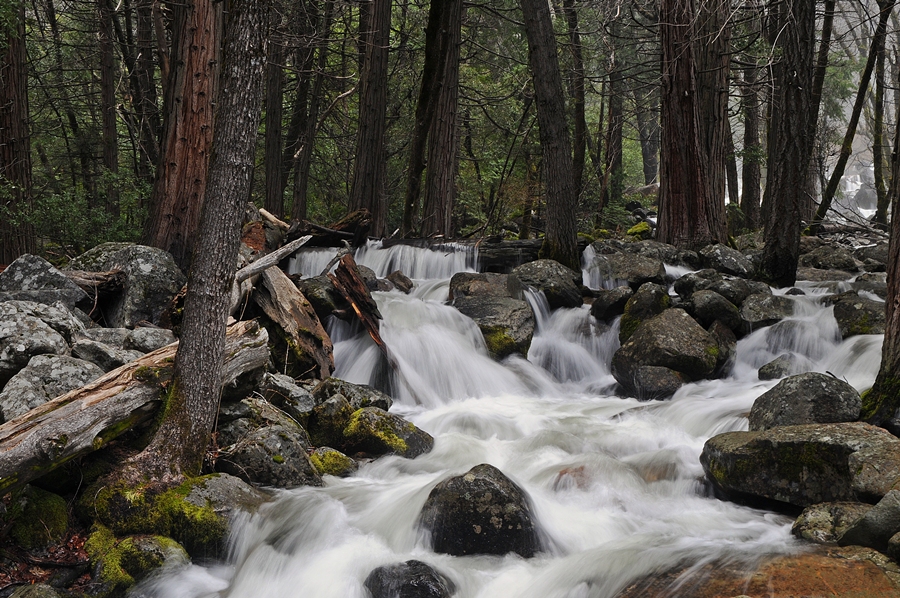
The second ingredient is water, and in the Sierra that means snow. Most of these falls are fed by creeks and rivers that drain high-elevation snowpack rather than by springs or steady year-round flow. That makes them dramatically seasonal: thunderous in spring, often a trickle or bone-dry by late summer. Yosemite Creek, which feeds Yosemite Falls, can slow to a whisper by August or September and sometimes stops entirely. Tueeulala Falls is so flashy that it is frequently dry by mid-summer in a normal year, while its larger neighbor Wapama Falls runs longer.
Because flow is tied to snowmelt, the calendar matters more here than at spring-fed falls elsewhere in the country. The general rule across the western Sierra is that falls build through April, peak somewhere from late April into June depending on elevation and snowpack, and then taper. Higher and larger drainages — like the Merced River feeding Vernal Fall and Nevada Fall — tend to hold their peak into late spring and early summer, while small side-creeks blow out early.
One honest caveat runs through everything below: reported waterfall heights vary by source and by what is being measured. A figure may describe a single clean plunge, the tallest individual drop in a staircase, or the cumulative fall over a whole series of tiers and cascades. Yosemite Falls is the textbook example — its widely cited 2,425-foot figure is the total of three sections, not one continuous curtain. Treat the heights in this ranking as well-documented approximations, not surveyed-to-the-foot certainties.
The Ranking: Sierra Nevada Waterfalls by Height
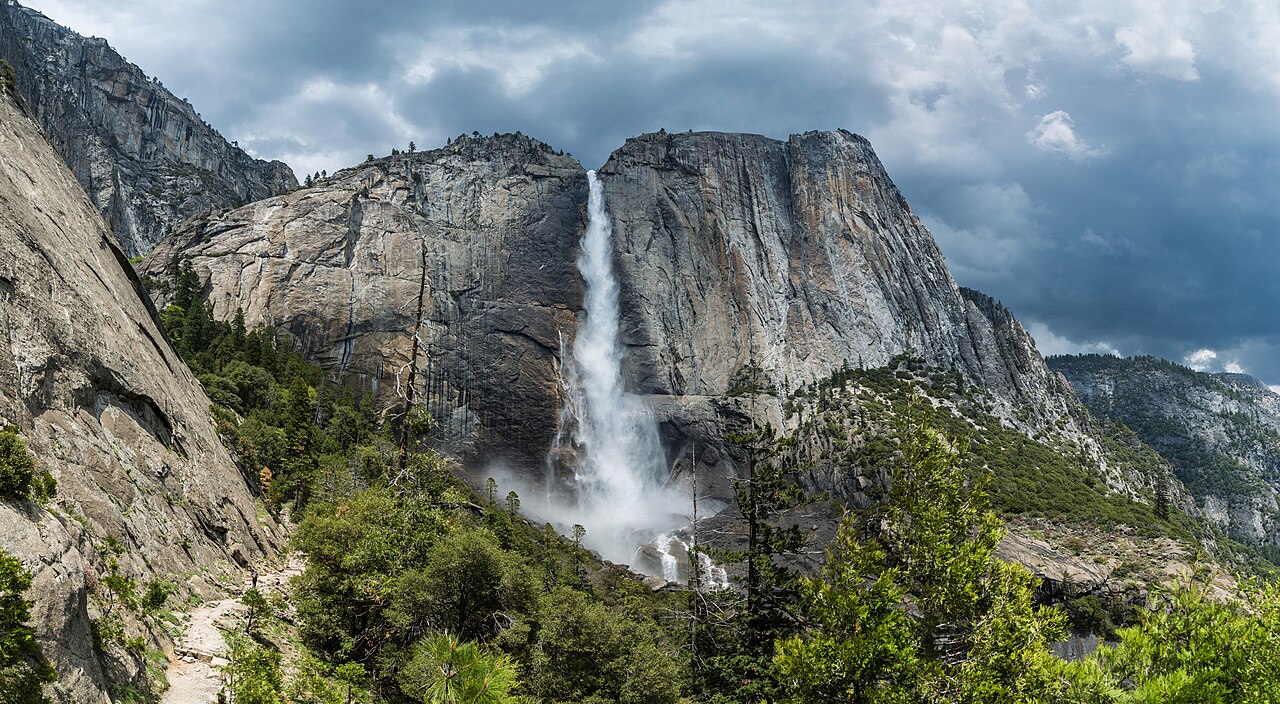
Ranked by reported height, the order is led by two giants on the walls of Yosemite Valley. Yosemite Falls tops the list at a cited 2,425 feet — a tiered waterfall on Yosemite Creek that drops in an Upper Fall, a churning set of middle cascades, and a Lower Fall. It is one of the tallest waterfalls in North America by total height. Second is Horsetail Fall at about 1,570 feet, a thin horsetail-type ribbon on the east face of El Capitan that is famous less for its volume than for a single optical event described below.
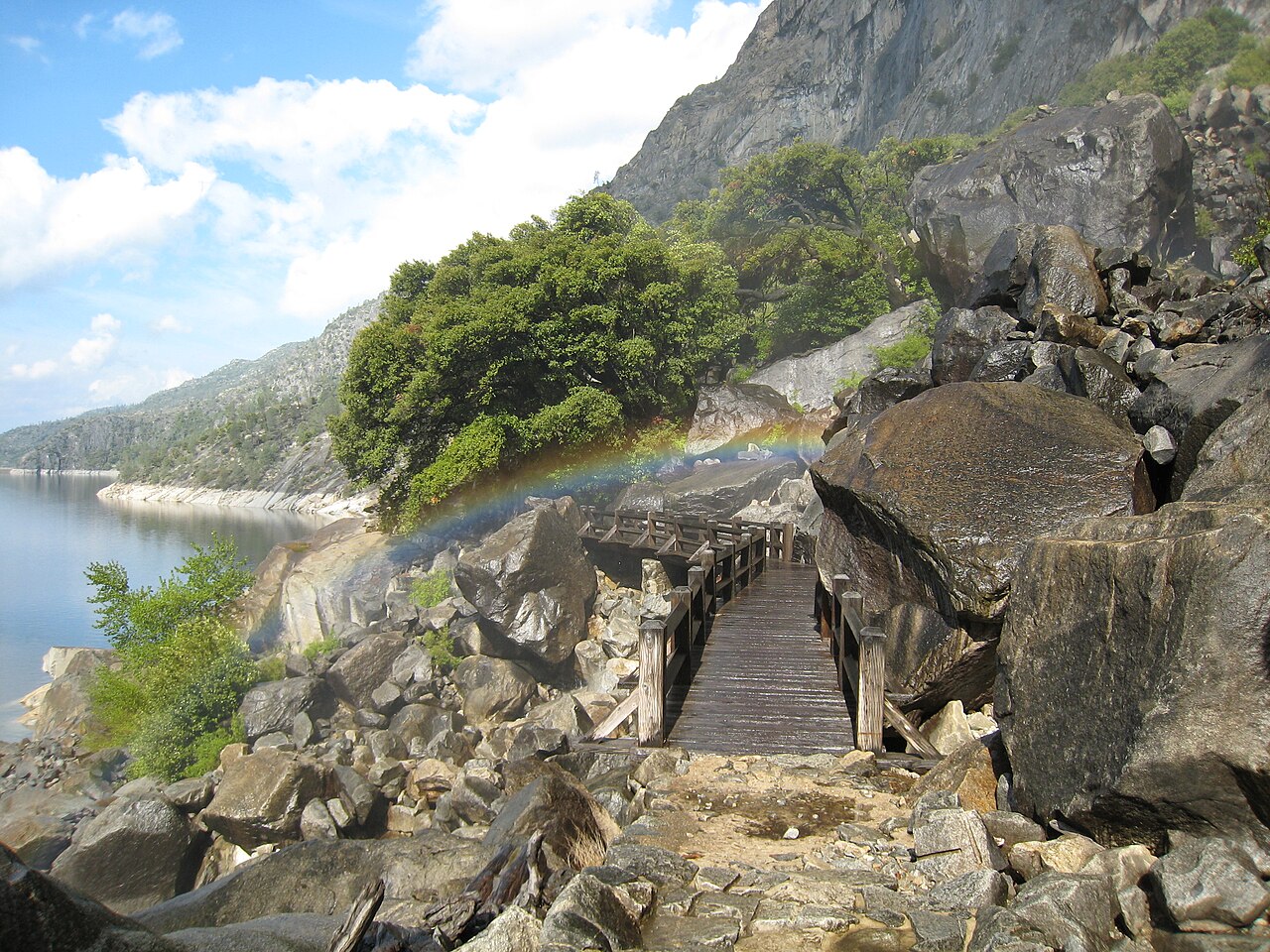
The middle of the ranking is a cluster of tall hanging-valley falls. Tokopah Falls in Sequoia National Park is reported around 1,200 feet, a long cascade on the Marble Fork of the Kaweah River tumbling down the head of Tokopah Valley. In Yosemite's Hetch Hetchy region, Wapama Falls (about 1,080 feet) and its neighbor Tueeulala Falls (about 880 feet) pour off the canyon wall above the reservoir, both reached by the same shoreline trail. These cascade-and-horsetail figures are cumulative drops over multiple tiers, so they should be read as totals rather than single sheer plunges.
The lower half of the list trades height for accessibility and reliability. Bridalveil Fall (617 feet) is the first major fall most visitors see entering Yosemite Valley, a plunge off a hanging valley that runs much of the year. The Merced River staircase delivers two of the most-photographed drops in the range: Nevada Fall at 594 feet and Vernal Fall at 317 feet, both on the Mist Trail / John Muir Trail corridor. Feather Falls (410 feet) sits well to the north in Plumas National Forest, a plunge on the Fall River that is a destination in its own right. Anchoring the ranking is Upper Eagle Falls (about 75 feet), a short, scenic cascade on Eagle Creek above Emerald Bay at Lake Tahoe — proof that not every memorable Sierra fall is a thousand-foot monster.
A note on ordering: because these heights come from different sources and measurement conventions, falls within a few dozen feet of each other could reasonably swap places. The broad tiers — valley giants over 1,000 feet, the 300–700-foot Merced and Bridalveil group, and the smaller Tahoe-area falls — are the durable takeaway, not the exact rung.
The Yosemite Valley Headliners
Yosemite Valley packs the highest concentration of famous waterfalls in the range, and three of them are easy to reach. Lower Yosemite Fall is the bottom section of the 2,425-foot Yosemite Falls system, and the loop to its base is a short, mostly flat walk that is one of the most popular in the park; the full data point of a 7.2-mile, strenuous outing refers to the Upper Yosemite Fall Trail, which switchbacks all the way to the top of the upper drop for a clifftop view of the valley. Bridalveil Fall, at 617 feet, is even more accessible — a roughly half-mile, easy round trip from the Bridalveil Fall parking area to a paved overlook. Its name in the local Ahwahneechee tradition is Pohono, and its plume often drifts sideways in the wind.
For hikers, the Merced River's two falls are the centerpiece of the valley's most iconic day hike. The Mist Trail climbs alongside the river to Vernal Fall — a 317-foot block waterfall whose granite staircase earns its name by soaking everyone within range during spring runoff — and continues to Nevada Fall, a 594-foot drop higher up the canyon. Reaching the top of Vernal Fall is roughly a 3-mile round trip rated strenuous; continuing to Nevada Fall extends the day to about 5.4 miles. Both peak in late spring, May into June, when the Merced is loaded with snowmelt. This is also the corridor where the Park Service posts its most insistent safety warnings, because the polished, wet granite above these falls has been the site of fatal slips.
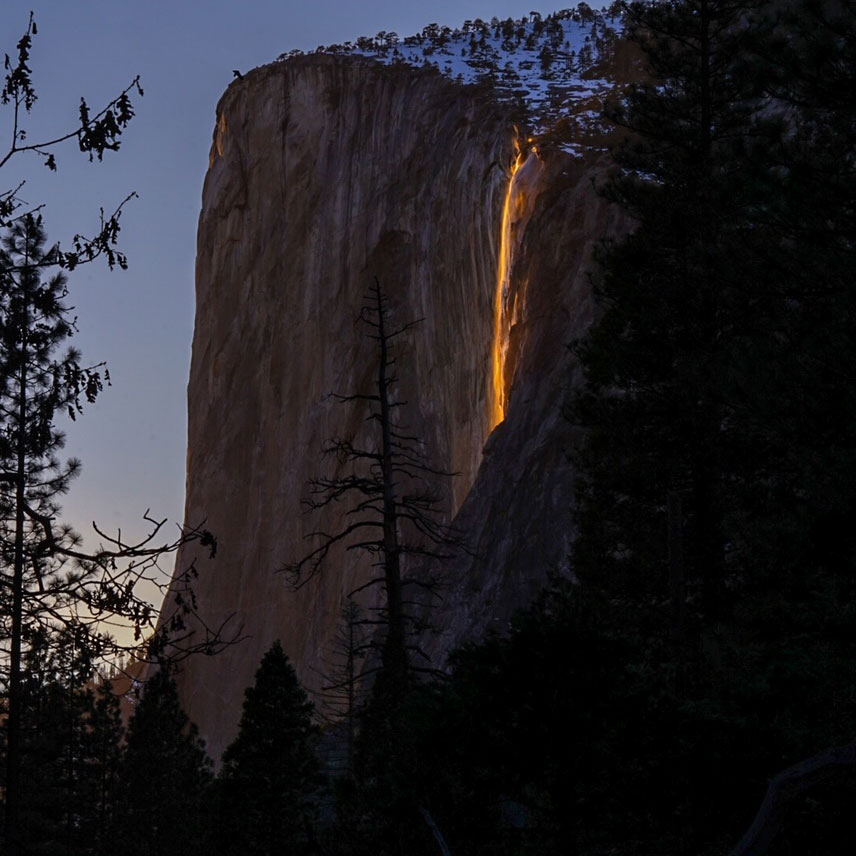
Then there is Horsetail Fall, the strangest entry on the list. At roughly 1,570 feet it is one of the taller falls in the park, but it is a faint seasonal ribbon on the east shoulder of El Capitan that most visitors never notice. Its fame rests on a brief window in mid-to-late February when — if the fall is flowing from recent snow and the western sky is clear at sunset — the low sun can light the water so that it glows orange and red, the so-called 'firefall' effect. The short access (about 1.5 miles, easy) belies how demanding the conditions are: snowmelt, clear skies, and the right week of February all have to line up, and the park now manages the crowds that gather for it.
Beyond Yosemite Valley: Hetch Hetchy, Sequoia, the Northern Sierra, and Tahoe
Hetch Hetchy, the reservoir-filled twin canyon in the northwest corner of Yosemite National Park, is the quieter half of the park's waterfall story. From the trailhead near Mather, a roughly 5-mile, moderate route along the north shore of the reservoir passes two big hanging-valley falls in close succession. Tueeulala Falls (about 880 feet) comes first — graceful but fickle, frequently dry by mid-summer — followed by Wapama Falls (about 1,080 feet) on Falls Creek, which carries more water and can actually surge over its footbridges at the height of spring runoff. Visiting in April or May rewards you with both falls running; come in August and you may find only one.
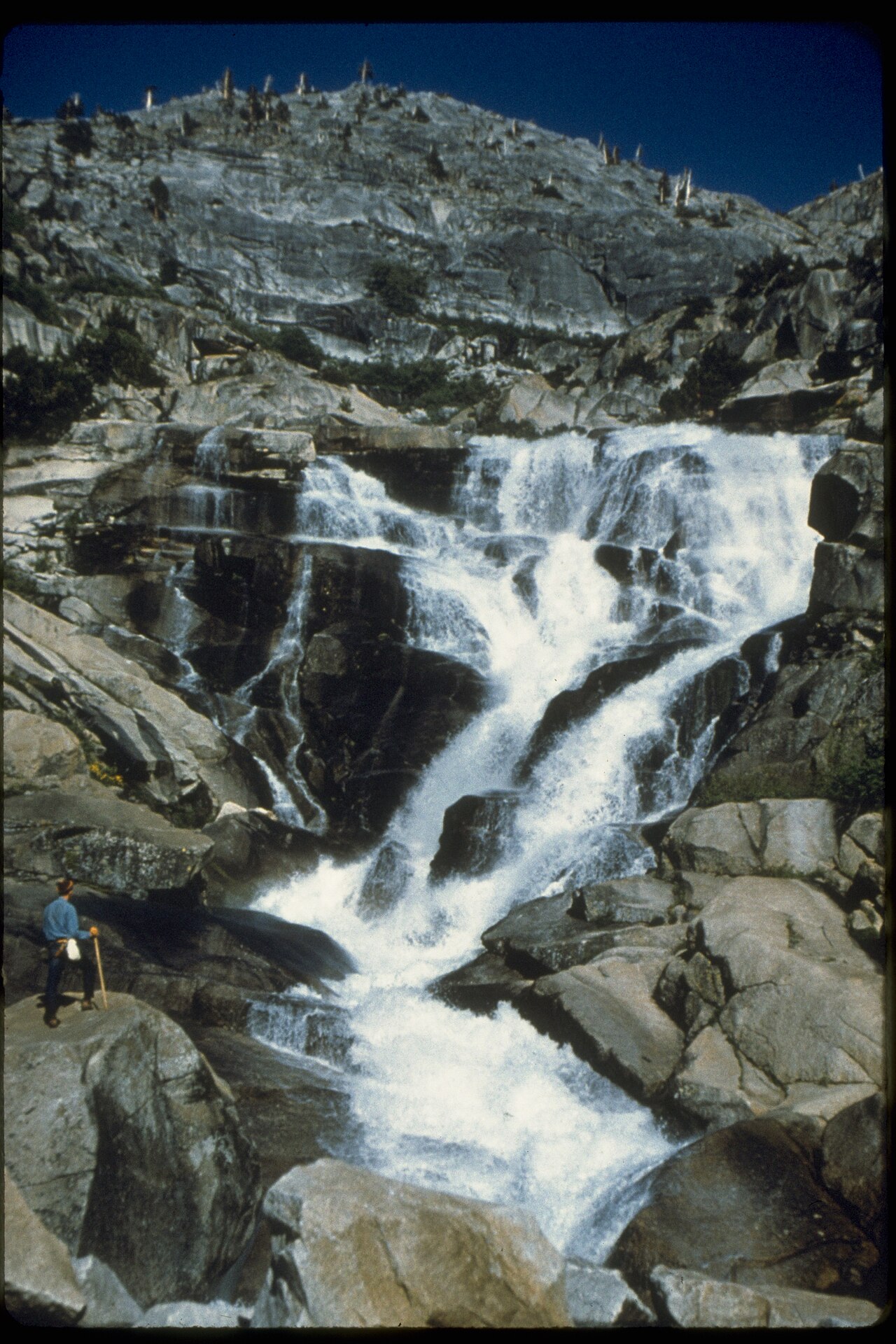
South in Sequoia National Park, Tokopah Falls is the marquee waterfall, a cascade reported near 1,200 feet on the Marble Fork of the Kaweah River. The trail from the Lodgepole area runs about 4.1 miles round trip at a moderate grade, following the river up toward the granite headwall and the Watchtower formation. Like the Yosemite falls, it is snowmelt-driven and best from late spring into early summer; the nearest gateway town is Three Rivers, on the park's southwestern approach.
The northern Sierra contributes Feather Falls, a 410-foot plunge on the Fall River in Plumas National Forest, near Oroville. It is the most committing day hike of the marquee group on raw mileage — about 8.8 miles round trip on a moderate loop to a railed overlook — and it flows best in spring. Being a national-forest fall rather than a national-park headliner, it tends to be far less crowded than its Yosemite cousins.
Finally, at Lake Tahoe, Upper Eagle Falls offers the most relaxed payoff on this list. Above Emerald Bay, a short trail of roughly 1.9 miles (moderate, with some rocky steps) climbs Eagle Creek past the falls toward the Desolation Wilderness, with the lake spread out below. At about 75 feet it is a fraction of Yosemite's height, but its setting above one of the most photographed bays in California earns its place. It, too, runs best from late spring into early summer as the surrounding snowpack melts out.
How to Time and Plan a Sierra Waterfall Trip
The single most important planning decision is timing, and for almost every fall on this list the answer is late spring. April through June is the broad sweet spot for the snowmelt-fed falls: Yosemite Falls, Bridalveil Fall, Vernal and Nevada Falls, Wapama and Tueeulala Falls, Tokopah Falls, Feather Falls, and Upper Eagle Falls all build toward peak in this window. The exact peak shifts year to year with snowpack — a big winter pushes strong flow later and longer; a dry winter means an earlier, weaker, shorter season. Check current conditions with the relevant land manager before committing to a long drive.
Match the fall to the effort you want. Easy, short outings: Bridalveil Fall (about 0.5 mile), Horsetail Fall (about 1.5 miles), and the Lower Yosemite Fall loop. Moderate hikes: Upper Eagle Falls (about 1.9 miles), Tokopah Falls (about 4.1 miles), the Hetch Hetchy falls (about 5 miles), and Feather Falls (about 8.8 miles). Strenuous days: the Mist Trail to Vernal Fall (about 3 miles round trip) and on to Nevada Fall (about 5.4 miles), and the Upper Yosemite Fall Trail (about 7.2 miles) to the brink of the highest fall in the range. The Mist Trail in particular is genuinely steep and, in spring, genuinely wet — expect to be soaked and to share the trail with crowds.
Two safety realities deserve emphasis. First, the same snowmelt that makes these falls spectacular makes the rivers above them lethally powerful in spring; the granite is slick, the current is cold and fast, and people have died wading or climbing past barriers near Vernal, Nevada, and other Sierra falls. Stay behind railings and out of the water above any drop. Second, Horsetail Fall's February 'firefall' window draws large crowds to a narrow stretch of Yosemite Valley, and the park typically imposes access and parking controls in those weeks — plan around them rather than showing up cold.
Most of these falls require an entry reservation or fee at some point in the year. Yosemite and Sequoia are National Park Service units with seasonal reservation systems and entrance fees; Hetch Hetchy has its own gate hours; Feather Falls sits in Plumas National Forest; and Upper Eagle Falls is on Forest Service land near a popular state-park area at Emerald Bay. Confirm reservations, road status, and parking with the managing agency before you go — and remember that what you came to see is a creature of the snowpack, so the mountain, not the calendar, has the final say on flow.