How to Read This Guide
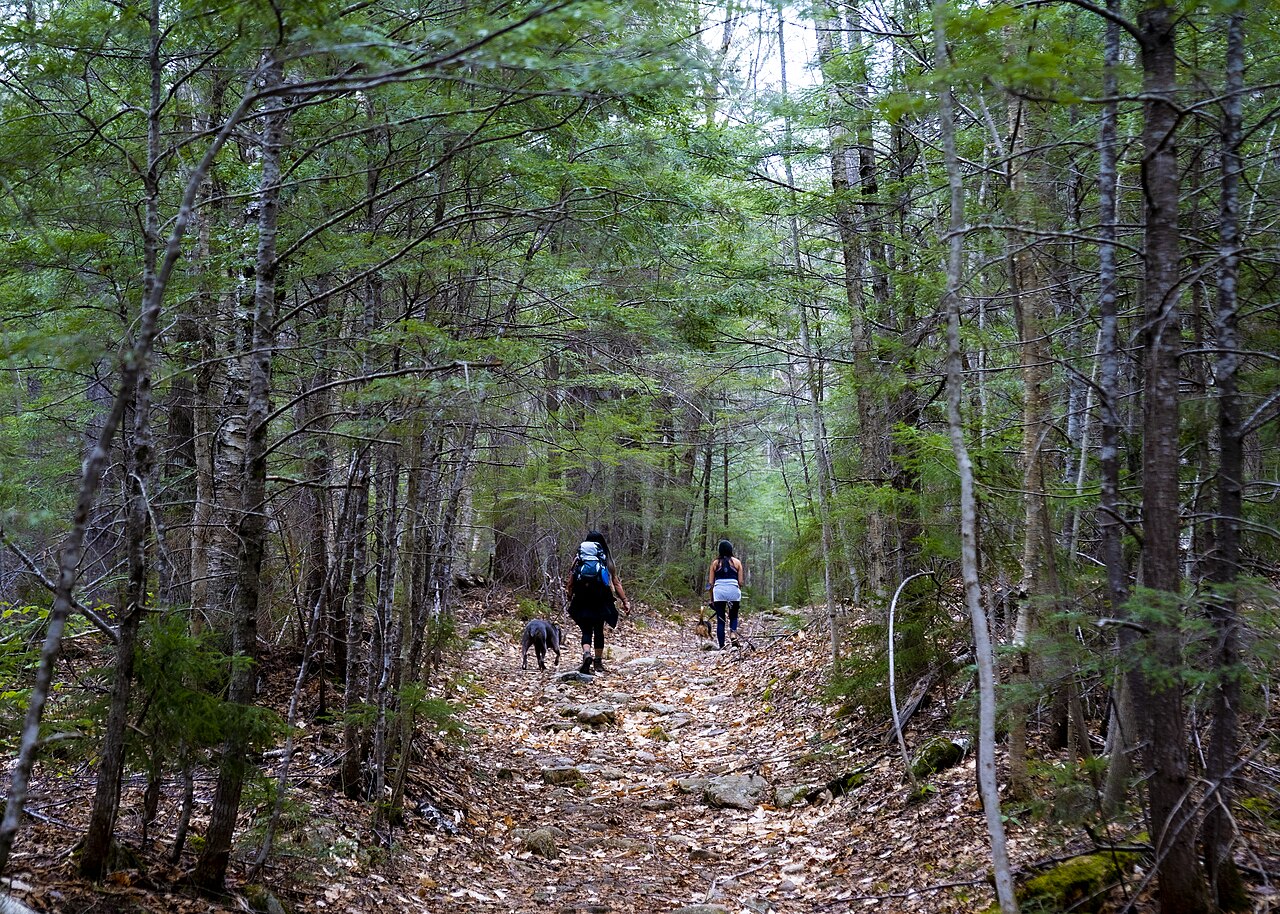
New Hampshire's waterfalls are concentrated in the White Mountains, where steep granite terrain, heavy snowmelt, and a dense trail network combine to produce a remarkable density of cascades within a small area. Almost every fall in this guide sits inside White Mountain National Forest or Crawford Notch State Park, and several cluster within a few miles of one another along U.S. Route 302, the Kancamagus Highway (NH 112), and NH 16 through Pinkham Notch. That geography is the practical reason a single weekend can string together half a dozen of these stops.
We have ordered the list roughly by stature and ambition — beginning with the tall, hike-in showpieces and moving toward the short, family-friendly walks. That is a deliberate editorial choice, not an official ranking. "Best" depends on what you want: Nancy Cascades rewards a committed all-day effort, while Silver Cascade asks only that you pull over and look up. Both belong on a serious list.
A note on the numbers. Reported waterfall heights in New Hampshire vary widely depending on who measured them and how. A figure from the Appalachian Mountain Club for a single clean drop will differ from a lidar-derived total for an entire cascading reach, and roadside falls in particular are routinely under- or over-stated because so much of the water is hidden up the hillside. Where we cite a height, treat it as an approximation drawn from a documented source, and expect other reputable sources to disagree by tens of feet. Trail distances and difficulty ratings likewise come from trail databases and land managers, and conditions change with weather, washouts, and seasonal closures — always check current status before you go.
The Tall Hike-In Falls: Nancy Cascades, Arethusa, and Ripley
Nancy Cascades is the most ambitious waterfall on this list and, at a reported height of roughly 300 feet, among the tallest in the state. It tumbles down Nancy Brook in a tiered series of drops on the slope above Crawford Notch, within White Mountain National Forest near Livermore. Reaching it is a moderate hike of about 5 miles round trip from the trailhead on Route 302 in Hart's Location, with well over a thousand feet of elevation gain; expect a brook crossing where you may get your feet wet, and note that the trail is lightly blazed, so a downloaded map is wise. The cascades run best from late spring through fall, with snowmelt feeding their fullest flow. The surrounding Nancy Brook area protects one of the largest tracts of old-growth spruce-fir forest in the Northeast, which makes the walk itself part of the reward.
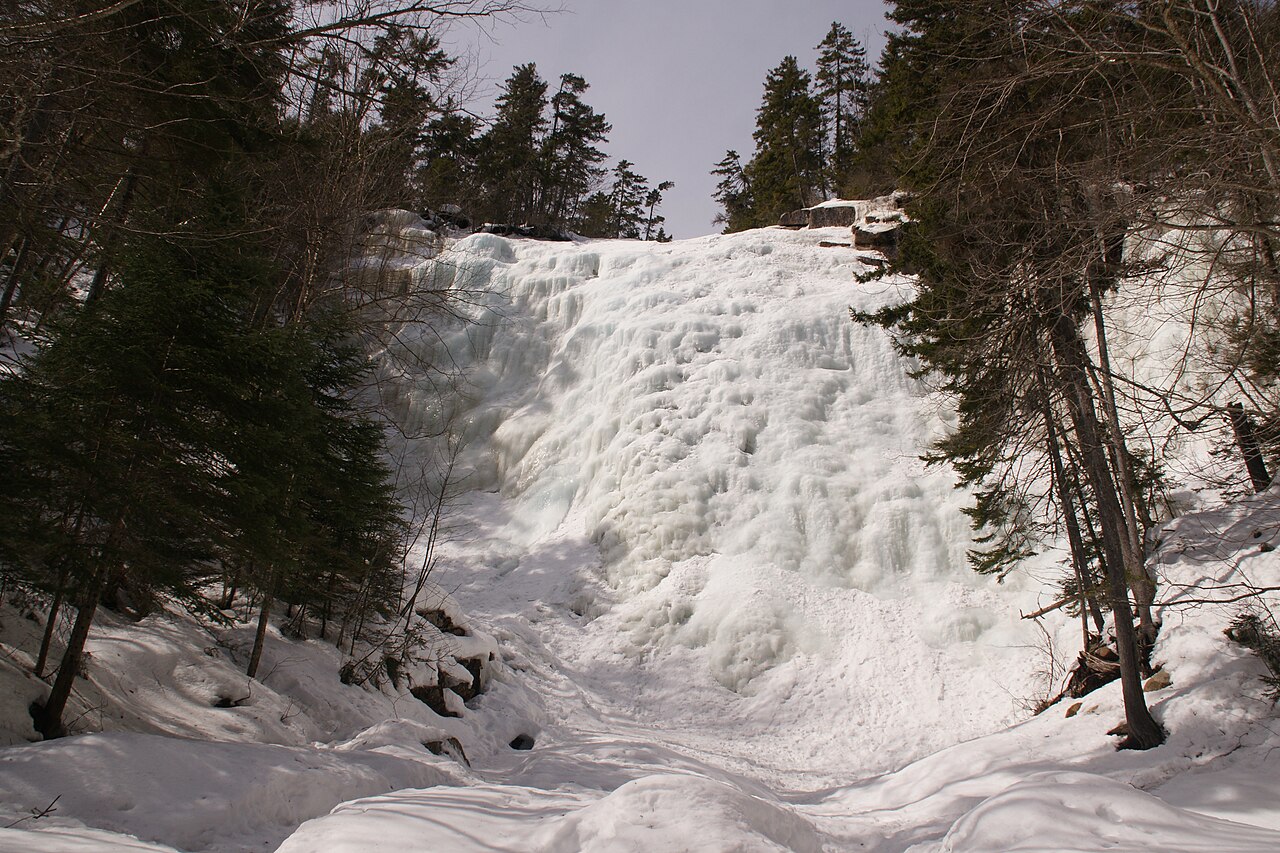
Arethusa Falls is widely described as the tallest single-drop waterfall in New Hampshire, a horsetail of water sliding down a granite cliff fed by Bemis Brook in Crawford Notch State Park. Its reported height is a good illustration of why precision is hard: the Appalachian Mountain Club has long estimated it at about 140 feet, while lidar-based measurements suggest closer to 155 feet, and some casual accounts claim nearly 200. The Arethusa Falls Trail climbs steadily for roughly 1.5 miles one way — about 2.9 miles round trip — gaining several hundred feet to the base of the falls. It is a moderate effort and one of the most popular waterfall hikes in the state, best enjoyed from late spring through fall when flow is reliable.
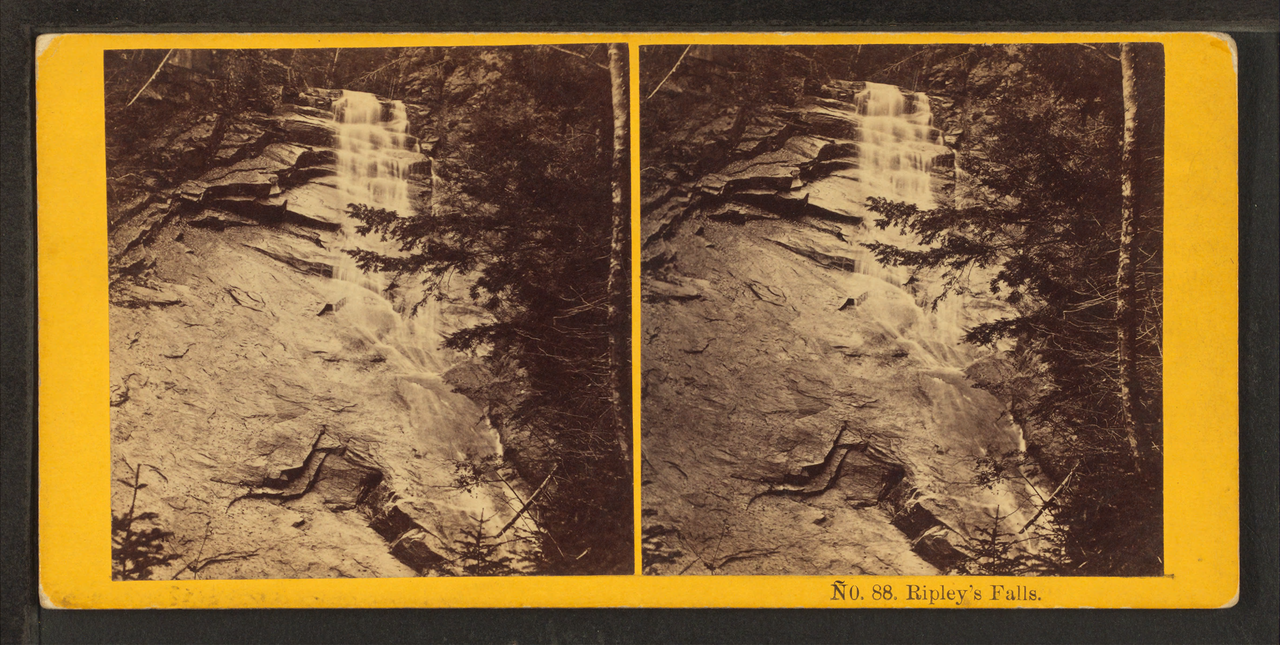
Ripley Falls is the third of the big hike-in falls and the most accessible of them, a roughly 100-foot horsetail where Avalanche Brook slides down a steep, roughly 60-degree rock face — one of the steepest-angled slides in New England. The hike is short, about 1.1 miles round trip with around 300 feet of gain, branching off the Ethan Pond Trail from a trailhead off Route 302 near the Willey House site in Crawford Notch State Park. Despite the modest distance, the trail is rocky and can be slick, so it earns a moderate rating; sturdy footwear matters here. It runs well across the warm months, spring through fall.
The Roadside Spectacle: Silver Cascade
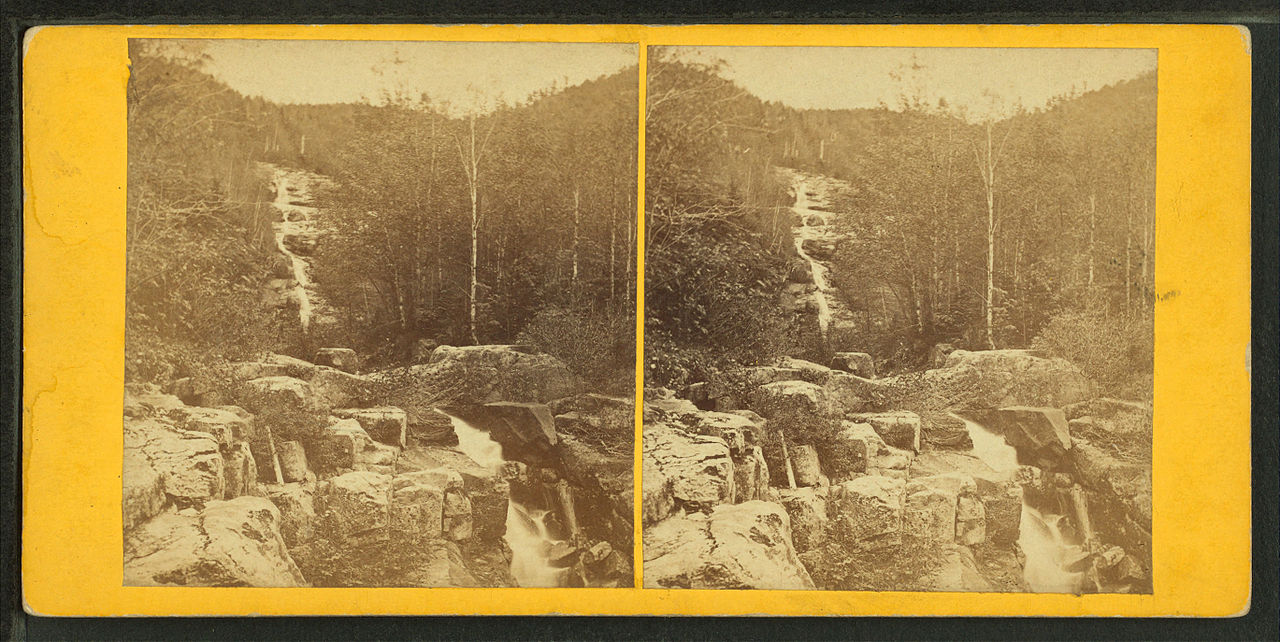
If you have time for only one waterfall in Crawford Notch and no appetite for a hike, make it Silver Cascade. Silver Cascade Brook drops down the flank of Mount Jackson directly toward Route 302, and you can take it in from the roadside without leaving the pavement — there are two large parking areas across the highway, and no fee to visit. It is among the most visited and best-known falls in the Crawford Notch area, and it has been called the most impressive roadside flume waterfall in New England.
Height here is a perfect case study in measurement ambiguity. The portion visible from the road is commonly cited at around 250 feet, but the brook continues far up the hillside out of easy view; lidar analysis of the full reach puts the total drop closer to 540 feet. We list the conservative roadside figure because that is what most visitors actually see, while acknowledging the larger number is also defensible — it simply depends on where you decide the waterfall begins and ends.
Silver Cascade peaks in spring. As a snowmelt-driven fall, it is at its loudest and most dramatic from April through June, when runoff from the surrounding peaks pours down the chute; by late summer in a dry year it can thin considerably. Cross the highway with real caution to view it up close — this is a fast stretch of road, and the falls are a known photo-stop where attention drifts.
Short Hikes, Big Payoff: Glen Ellis, Sabbaday, and Diana's Baths
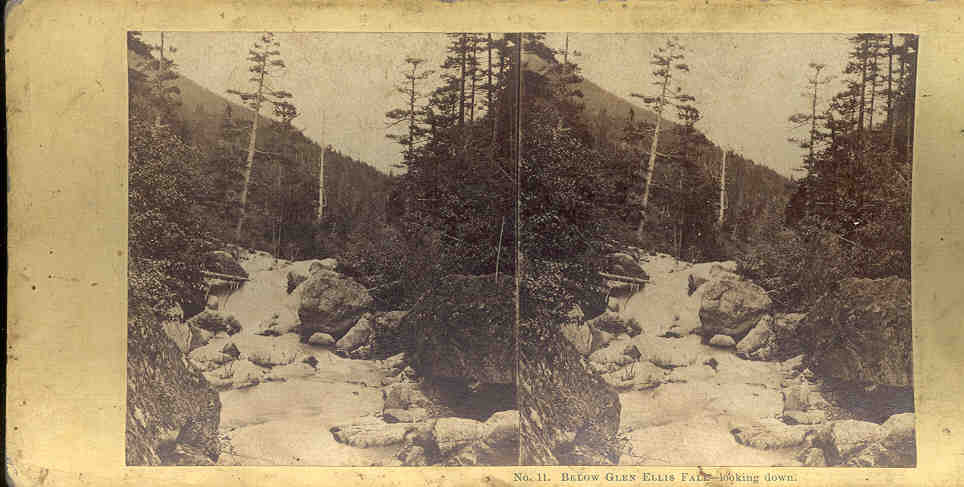
Glen Ellis Falls, in Pinkham Notch near Jackson, is the standout of the easy-access falls. The Ellis River plunges about 64 feet in a single dramatic drop, distinctive for the sharp, almost right-angled bend the bedrock forces on the water and for the deep green pool at its base. The walk is short — roughly 0.6 miles round trip — but it routes through a pedestrian tunnel under NH 16 and down a series of stone staircases, so it is not flat. It is an easy outing best caught in spring, April through June, when snowmelt drives the heaviest flow. Swimming in the pool is prohibited.
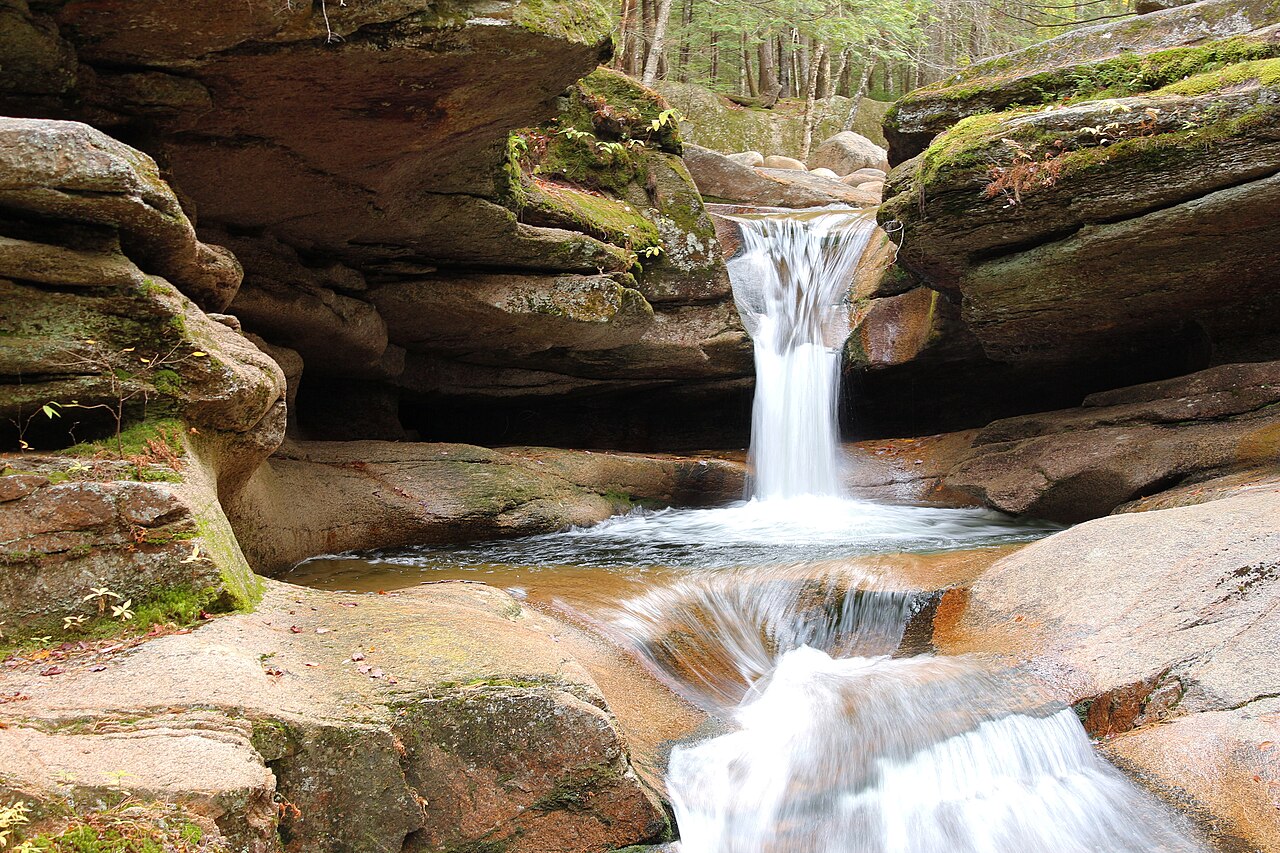
Sabbaday Falls is the most beloved stop on the Kancamagus Highway, near Waterville Valley, and one of the easiest waterfall walks in the White Mountains. A wide, gentle path of about 0.7 miles round trip leads to a tiered fall of roughly 38 feet where Sabbaday Brook drops through a narrow flume and gorge into an emerald pool. A small loop with wooden stairs lets you view it from base to top and back. It is family- and stroller-friendly along much of its length, and dogs on leash are welcome. Note that the falls trail is generally a warm-season destination — typically open in summer and fall — because icy conditions near the flume make winter access hazardous; flow is strongest with spring snowmelt.
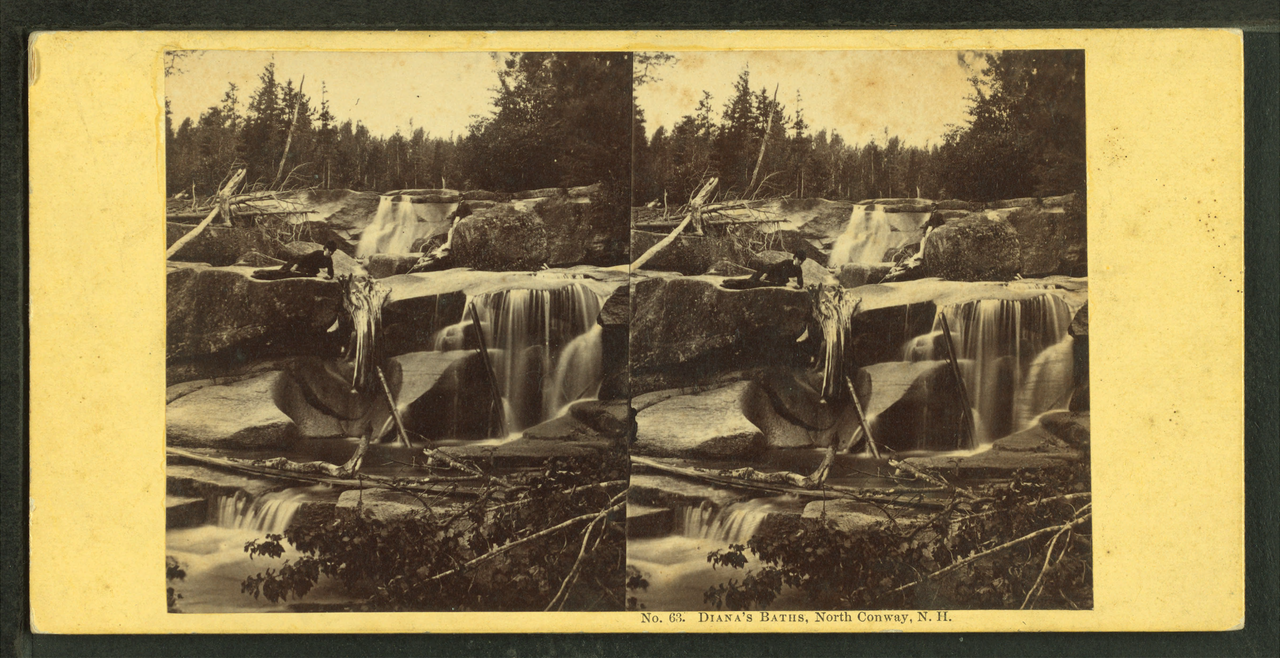
Diana's Baths, near Bartlett just outside North Conway, is the most accessible fall on this list and the best choice for families or anyone wanting minimal effort. Lucy Brook spills over a series of ledges and pools rather than dropping in one sheet — a tiered system whose total drop is reported at roughly 75 to 80 feet. The crushed-stone path runs just over half a mile each way (about 1.2 miles round trip), is wide and relatively flat with benches along the way, and is navigable by most visitors including those with strollers. It is managed by White Mountain National Forest; expect a modest per-car parking fee at the kiosk, with on-foot entry free. Late spring through fall is the sweet spot.
Quieter Cascades for Collectors: Georgiana Falls and Beecher and Pearl
Georgiana Falls, near Lincoln, rewards a little more route-finding than the marquee stops. An unmarked trail leaves a parking area off Hanson Farm Road and follows Harvard Brook through a near-continuous chain of cascades; the named Georgiana Falls itself is about 30 feet, reached on a roughly 1.6-mile round trip with around 400 feet of gain — a moderate walk owing more to footing and the unblazed path than to distance. Those willing to push another half mile up steep terrain can reach the wilder Harvard Falls, a much larger and more dramatic drop that long required following herd paths. Plan on the warm months, spring through fall, for safe footing and good flow.
Beecher and Pearl Cascades are a pair of small but genuinely lovely cascades on Crawford Brook, reached by a flat, easy walk of about 1 mile round trip on the Avalon Trail from the Crawford Depot on Route 302 in Carroll. You cross the railroad tracks and follow the trail a short distance before a marked loop drops to the brook: Beecher Cascade pours through a narrow chute carved into a rock crevice, while Pearl Cascade, a few hundred yards farther, is shorter but much wider, fanning out over a rock slab. Combined, they total roughly 25 feet. Pearl in particular is best in high water, so visit in spring or after heavy rain. Their proximity to the Mount Willard and Avalon trailheads makes them an easy add-on to a larger Crawford Notch day.
Neither of these is the reason most people drive north, and that is exactly their appeal. They see far less traffic than Sabbaday or Silver Cascade, they pair naturally with bigger objectives nearby, and they round out an honest picture of what New Hampshire's waterfalls actually are: not a handful of famous drops, but a dense, varied catalog of moving water threaded through the White Mountains.
Planning Your Waterfall Trip
Timing is everything for New Hampshire waterfalls. The single biggest variable is snowmelt: roadside and snowmelt-fed falls like Silver Cascade, Glen Ellis, and Sabbaday are at their most powerful from April through June, then taper as summer dries the high country. Hike-in falls fed by larger watersheds — Nancy Cascades, Arethusa, Ripley, Georgiana — hold respectable flow later, generally late spring through fall, which conveniently coincides with safer trail conditions. Several trails near gorges and flumes effectively close in winter because ice makes the water's edge dangerous, so the practical season for most of these is roughly May through October.
Geography makes clustering easy. Crawford Notch alone holds Silver Cascade (roadside), Arethusa and Ripley Falls, and Beecher and Pearl Cascades, all off Route 302 within a short drive of each other — a single ambitious day could touch all four at varying effort levels. The Kancamagus Highway carries Sabbaday Falls; Pinkham Notch on NH 16 has Glen Ellis; and the North Conway and Lincoln areas anchor Diana's Baths and Georgiana Falls respectively. Nancy Cascades is the outlier that demands its own day given the mileage involved.
A few logistics worth confirming before you leave. Many White Mountain National Forest trailheads require a recreation pass or charge a small per-car parking fee at a self-serve kiosk (often cash only), and popular lots like Diana's Baths and Sabbaday fill early on summer weekends. Wear real footwear — granite ledges beside fast water are slick, and "easy" here still often means stairs and uneven rock. Swimming is prohibited at several of these falls, including Glen Ellis and Sabbaday, both for safety and to protect the sites. Finally, always check current trail status with the land manager: washouts, bridge outages, and seasonal closures are routine in this terrain, and the conditions you read about online may be a season out of date.