What 'easy' actually means at a waterfall
The waterfalls on this list earn the word easy in one of two ways. Some are roadside, meaning you park, walk a few dozen steps to a railing, and the falls fill the windshield before you've finished your coffee. Others sit at the end of a short trail, generally under a mile round-trip, on a paved or well-graded path that a determined four-year-old can manage and that won't wreck the back half of a family vacation. Every entry below is documented as easy difficulty in our records, and most are short enough that the walk is shorter than the drive from the parking lot.
A quick honesty note on numbers. Reported waterfall heights vary a lot depending on who measured and how. A single sheer plunge is straightforward, but a tiered or cascading fall can be quoted as the tallest single drop or as the cumulative height of every step stacked together. So when you see 442 feet for ʻAkaka Falls or 286 feet for Salt Creek Falls, read those as well-documented figures rather than surveyed-to-the-inch certainties. The U.S. Geological Survey's Geographic Names Information System (GNIS) is the baseline reference for official names and locations, but even authoritative sources differ on height by tens of feet for the same waterfall.
One more practical filter: 'easy to reach' and 'easy to get to the trailhead' are different problems. Rainbow Falls near Stehekin, Washington, has a trail barely a tenth of a mile long, yet the trailhead is reachable only by passenger ferry or floatplane up Lake Chelan. Bird Woman Falls in Glacier is a roadside view, but the road is the seasonal, sometimes vehicle-reservation-gated Going-to-the-Sun Road. The walk is trivial; the logistics deserve a glance before you commit a family day to it.
Roadside giants: park, walk a few steps, look up
If your definition of a perfect family stop is 'no actual hike,' start in Alaska's Keystone Canyon outside Valdez. Two big falls drop straight off the canyon walls within a mile of each other along the Richardson Highway, with large pullouts directly across the road. Bridal Veil Falls, documented at roughly 600 feet, fans down the cliff in a series of cascades, and Horsetail Falls sits just down the road. Both are snowmelt-fed, so they roar from late spring through summer and then freeze into the famous ice-climbing curtains by winter. You can see both without leaving the shoulder of the highway, which makes the canyon one of the best big-payoff, zero-effort stops anywhere in the country.
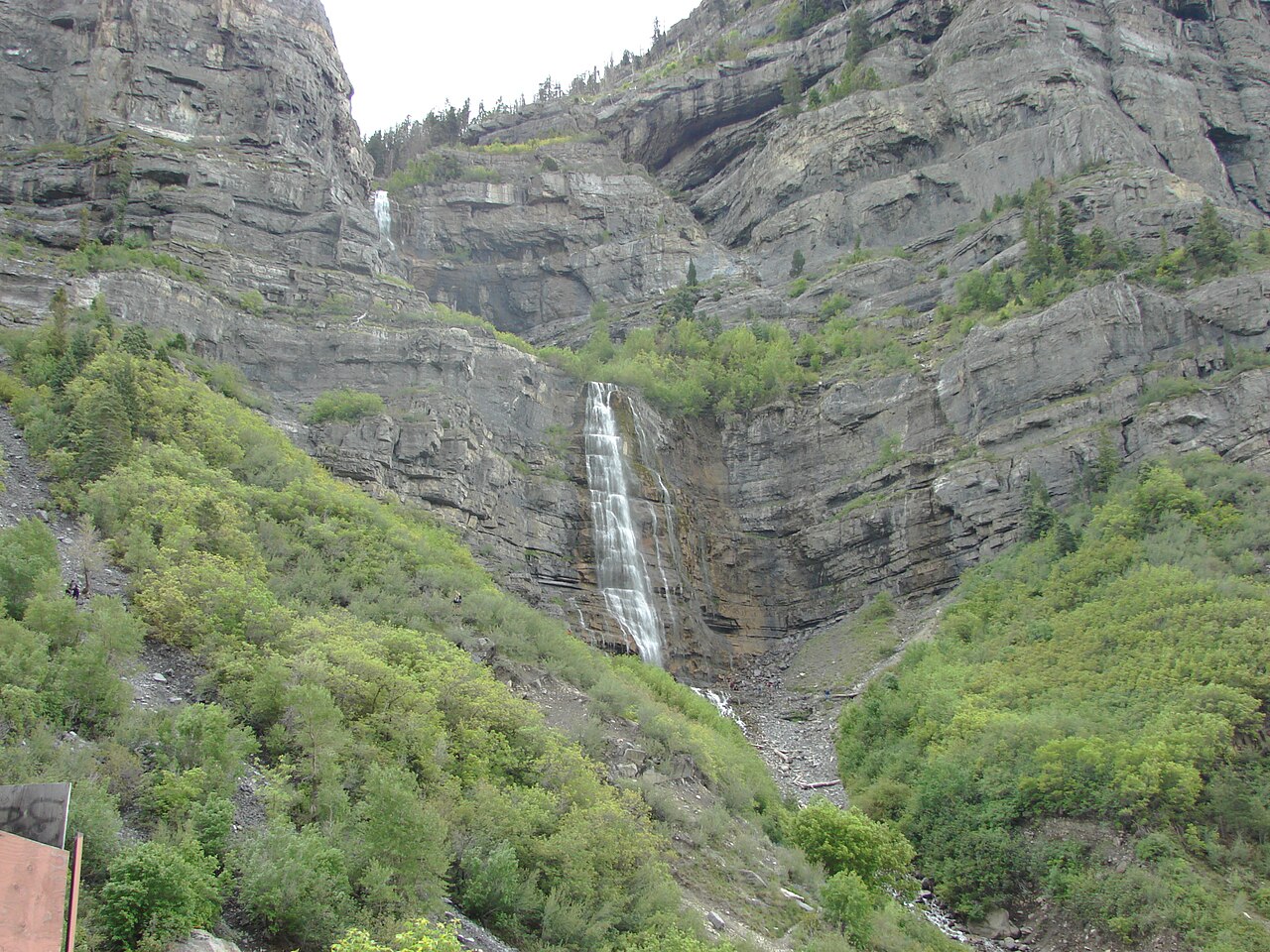
Utah offers a similar deal closer to a city. Bridal Veil Falls outside Provo is a tiered fall recorded at about 607 feet that tumbles down the canyon wall in Provo Canyon, with a short paved path (roughly a third of a mile) from the parking area and a county park at its base. It runs hardest during spring snowmelt from April into June. Oregon's Salt Creek Falls, the state's second-tallest at a documented 286 feet, is reached by turning off Highway 58 near Oakridge; the main observation platform sits only about 50 yards from the lot and is wheelchair accessible, per the Willamette National Forest, with a paved loop offering more canyon-rim viewpoints for anyone who wants a few more minutes outside.
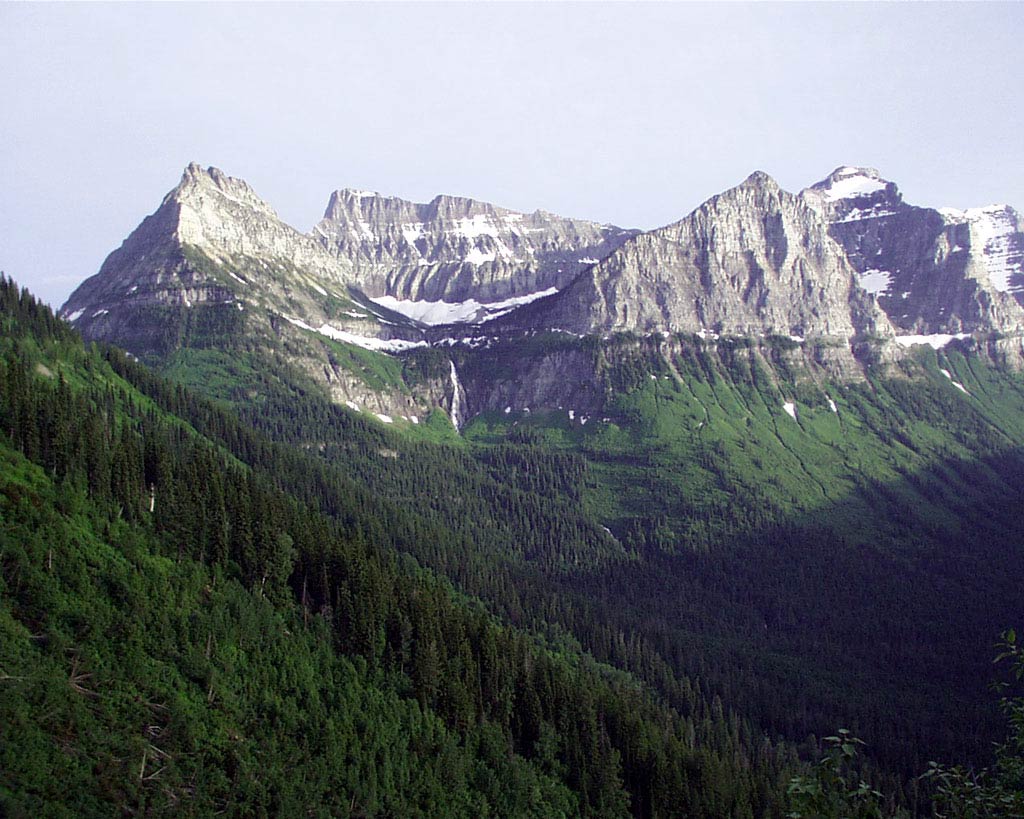
Glacier National Park's Bird Woman Falls is the purest roadside view of the bunch: a horsetail fall documented at 560 feet, fed by snowfields and a remnant glacier on Mount Oberlin, and visible from marked pullouts along the western side of the Going-to-the-Sun Road. There's no trail to the base at all; you simply pull over and look across the valley, best in June and July when snowmelt is at its peak. Just plan around the road's seasonal opening and any vehicle-reservation requirements before you count on it for a family day.
The most remarkable short walk in this group is Rainbow Falls near Stehekin, Washington, a tiered fall whose first tier plunges over 300 feet. The trail to the viewpoint is only about a tenth of a mile. The catch, and it's a real one, is that Stehekin has no road connection to the outside world: you reach it by the Lady of the Lake passenger ferry or a small plane, then a short shuttle out to the falls. Peak flow is May into June. It's the rare case where the hike is easier than the journey, and worth knowing about before you build a trip around it.
Short, paved, kid-tested trails
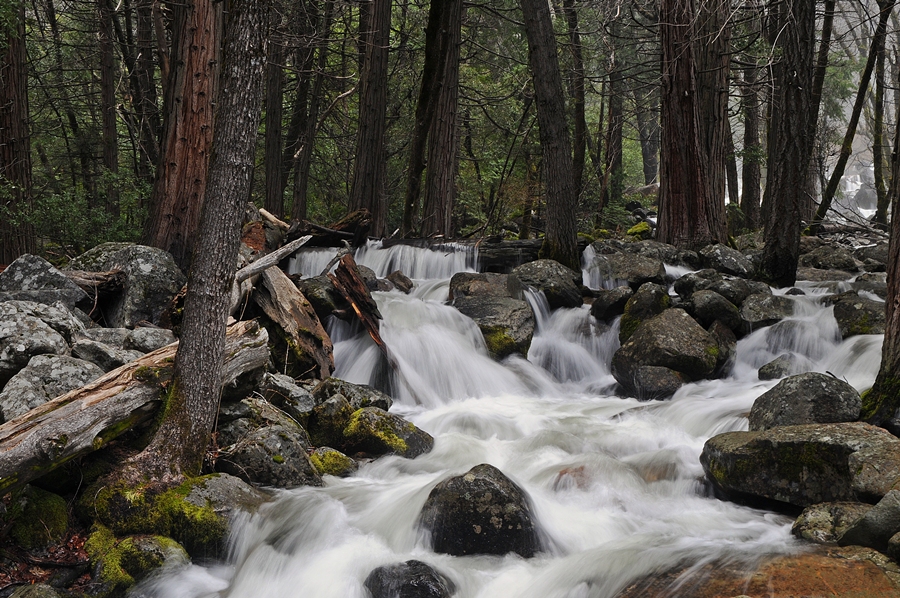
When you do want a little walk, Yosemite is the gold standard for short-trail, huge-reward waterfalls. Bridalveil Fall, a 617-foot plunge on Bridalveil Creek, is the first major waterfall you see entering Yosemite Valley, and its trail is about a half-mile round-trip on a recently rehabilitated path. After a multi-year restoration, the route now includes a raised boardwalk and viewing platforms, with a wheelchair-accessible viewing area partway up from the main lot (the grade steepens past that point). The National Park Service notes the falls run hardest with spring snowmelt from roughly April through June; by late summer they can thin to a trickle.
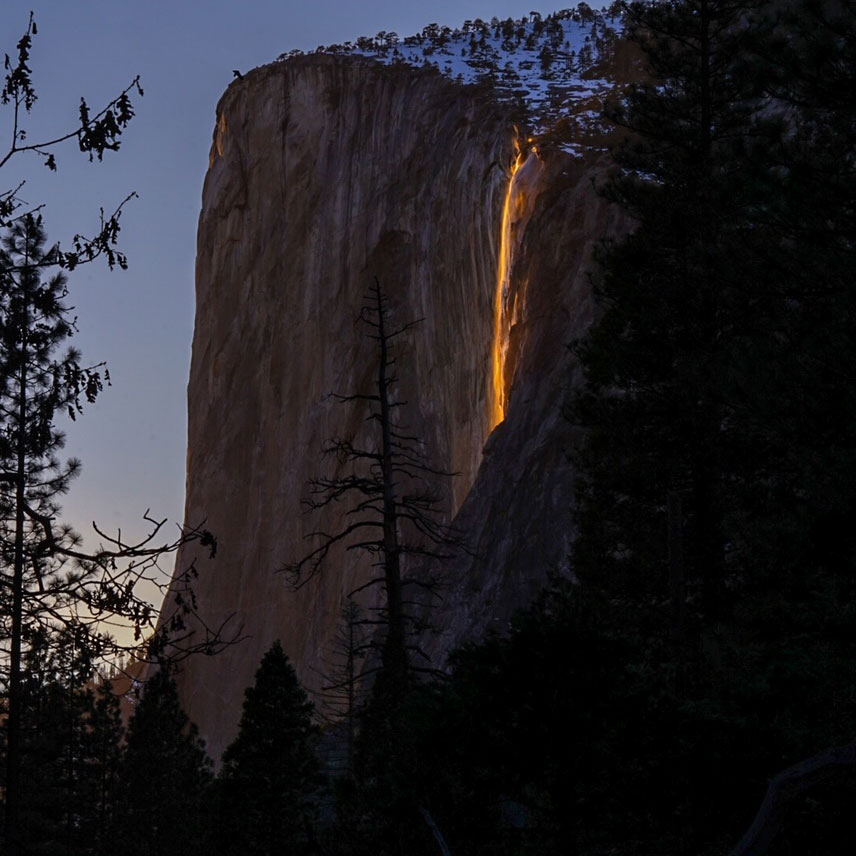
Yosemite's other famous short walk is to the base of Horsetail Fall, the seasonal ribbon on the east face of El Capitan that draws crowds every February for the 'firefall' effect, when the late-afternoon sun lights the water orange. Horsetail is recorded at a striking 1,570 feet, the tallest fall on this entire list, yet the viewing walk is short and easy, roughly a mile and a half on the valley floor. The window is narrow, though: it needs mid-to-late February timing, enough snowmelt to actually be flowing, and clear skies at sunset. It is one of the few entries here where the season is measured in days, not months.
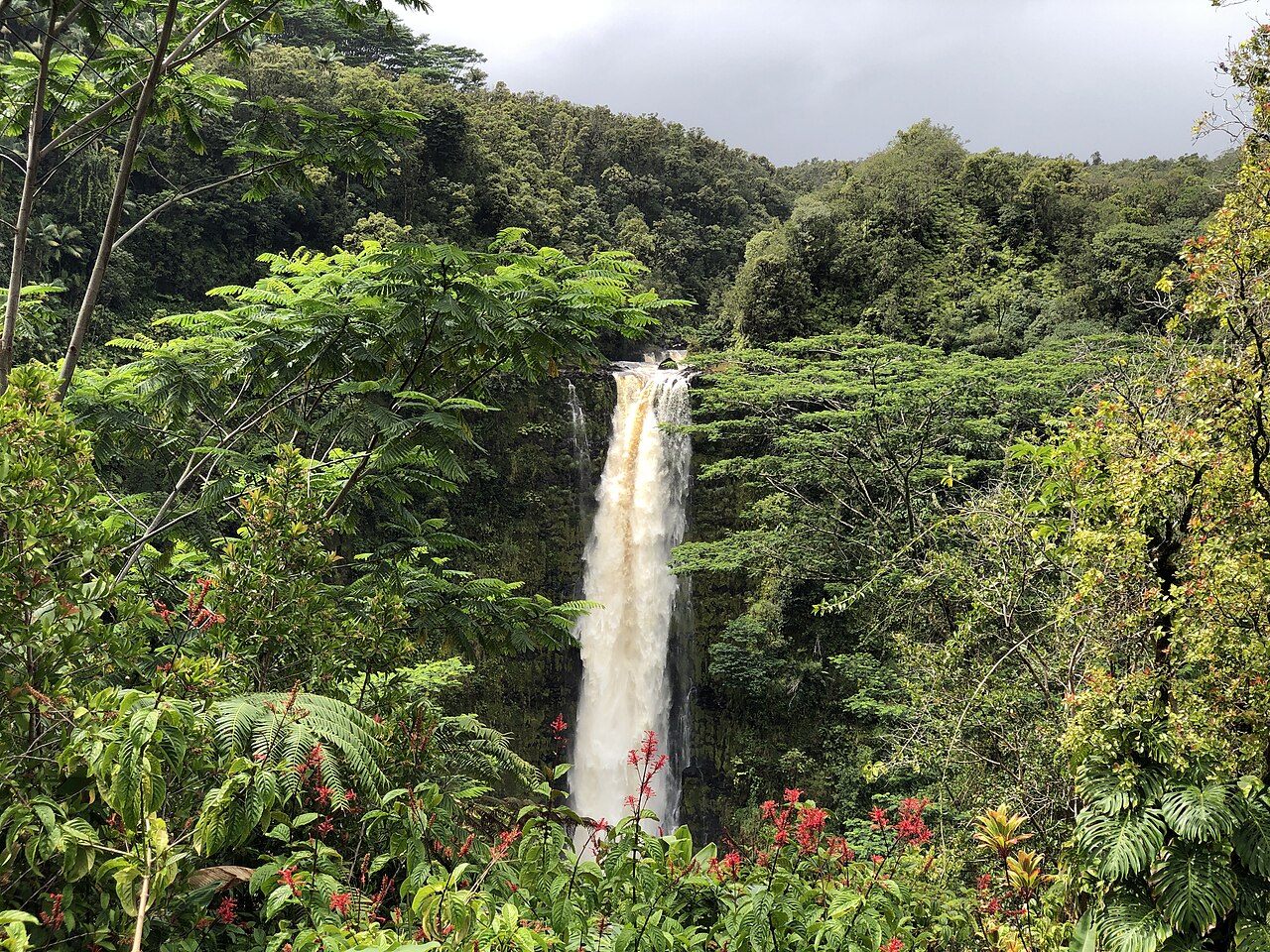
On Hawaii's Big Island, ʻAkaka Falls is the model family waterfall hike. A paved loop of about four-tenths of a mile through rainforest, wild orchids, and bamboo leads to an overlook of the 442-foot plunge of ʻAkaka Falls (with a glimpse of Kahuna Falls along the way), per Hawaii's Division of State Parks. It does include sets of steps, so it's not stroller- or wheelchair-friendly, and the state park charges a per-person entry and per-vehicle parking fee for non-residents. A leisurely loop runs under an hour, making it an easy add to any Hilo-coast day. Nearby Umauma Falls is a tiered fall recorded around 300 feet, viewed from the privately operated Umauma Experience via a very short walk; because it's on private land it carries an admission fee and its own hours.
Easy mountain falls for a half-day out
Colorado has two excellent low-effort options in old mining towns. Box Canyon Falls in Ouray is a plunge documented around 285 feet that thunders inside a narrow slot in the rock; the city-run Box Cañon Falls Park threads a short trail and walkway, roughly a half-mile of walking, into the gorge so you can feel the spray, with peak flow from late spring into summer. Up the road in Steamboat Springs, Fish Creek Falls is a 283-foot plunge reached by a short half-mile out-and-back to the overlook from the Routt National Forest trailhead, best during May–June snowmelt. Both pair a short, easy walk with a genuinely dramatic payoff.
In North Carolina's southern mountains, Whitewater Falls in the Nantahala National Forest is one of the tallest waterfalls in the eastern United States, commonly cited around 411 feet for its cascading run down the Whitewater River. The upper falls are reached by a paved path of roughly a half-mile to a railed overlook near Sapphire and Cashiers, and the falls run strongest with spring snowmelt and after heavy rain from March into May. Important safety note for families: the overlook is the safe place to be. Whitewater Falls has a long record of fatal falls when people leave the marked path and scramble on wet rock above the cascade. Keep kids inside the railings.
New York's Adirondacks contribute Roaring Brook Falls near Keene Valley, a tiered fall recorded around 270 feet on the flank of Giant Mountain in state-managed wilderness. A short walk from the trailhead reaches a lower viewpoint of the falls, with spring and early summer delivering the heaviest flow as the high peaks shed their snow. It's a quick, satisfying stop that doesn't demand a full Adirondack day-hike commitment, ideal when you want a real waterfall without a real mountain ascent.
How to pick the right one for your day
Match the waterfall to the constraint you actually have. If the constraint is mobility or a stroller, lean toward the roadside views (Bird Woman Falls, the Keystone Canyon pair near Valdez, Salt Creek Falls' paved upper platform) where the walking is minimal and the surfaces are hard-packed or paved. If the constraint is attention span, the very short trails, ʻAkaka Falls' loop, Bridalveil Fall's half-mile, Fish Creek and Whitewater's overlook paths, keep kids moving and reward them fast before anyone melts down. If the constraint is time, remember that for several of these the drive or boat ride dwarfs the walk, so budget for the approach, not the trail.
Time it for water. Nearly every fall here is snowmelt- or rain-fed, which means spring runoff (broadly April through June across the western mountains) is when they look their best, and late summer through fall is when several can thin dramatically or, in Bird Woman's case, nearly stop. Hawaii's ʻAkaka and Umauma are the steadiest year-round because they're rain-fed in a wet climate. Yosemite's Horsetail 'firefall' is the strict outlier, demanding a specific mid-to-late-February alignment of flow, sun angle, and clear sky.
Finally, treat railings as non-negotiable with kids. The single most consistent danger at family-friendly falls is not the trail but the temptation to climb past the overlook onto wet rock for a better photo. Whitewater Falls is the cautionary example, but the rule holds everywhere: wet granite and moss are far more slippery than they look, and current at the lip of a fall is unforgiving. The good news is that every waterfall on this list is built to be enjoyed exactly as designed, from the marked viewpoint, with the whole family, and very little effort. Always confirm current trail status, fees, road openings, and any reservation requirements with the managing agency before you go.