How Wisconsin's Waterfall Geography Works
Wisconsin is not the first state most people picture when they imagine waterfalls, but its falls are very real and very specific in where they live. Almost everything worth a special trip sits in two regions. The first is the far north, along the Lake Superior watershed, where rivers like the Black, the Bad, and the Amnicon cut through ancient basalt and red sandstone on their way to the big lake. The second is Marinette County in the northeast, which markets itself — credibly — as the 'Waterfalls Capital of Wisconsin,' with a cluster of county parks built specifically around named falls on the Pike and Pemebonwon river systems.
The reason for this clustering is geology. The Lake Superior basin and the northeastern uplands expose hard, erosion-resistant bedrock where streams drop over ledges and through gorges; much of the rest of the state is glacial till, sand, and gentler terrain that produces few true falls. That is why a guide to Wisconsin waterfalls is really a guide to a handful of state and county parks, most of them within a few hours of Superior, Hudson, or Marinette.
A practical consequence: these are seasonal features. Wisconsin's falls run hardest during spring snowmelt, roughly April through June, when the northern rivers are swollen. By late summer many of them thin out, and in winter several gorge trails close because the rock stairs ice over and become genuinely dangerous. Plan around the water, not just the weather. A waterfall that thunders in May can be a trickle in August.
One more honest note before the list: published heights for these falls vary by source and by how they are measured. A single clean plunge is easy to quantify; a long cascade or slide is not, and different references count the total drop differently. The numbers below come from state park, county, and waterfall-database documentation, but treat them as well-sourced estimates rather than surveyed precision.
The North: Lake Superior's Big Drops
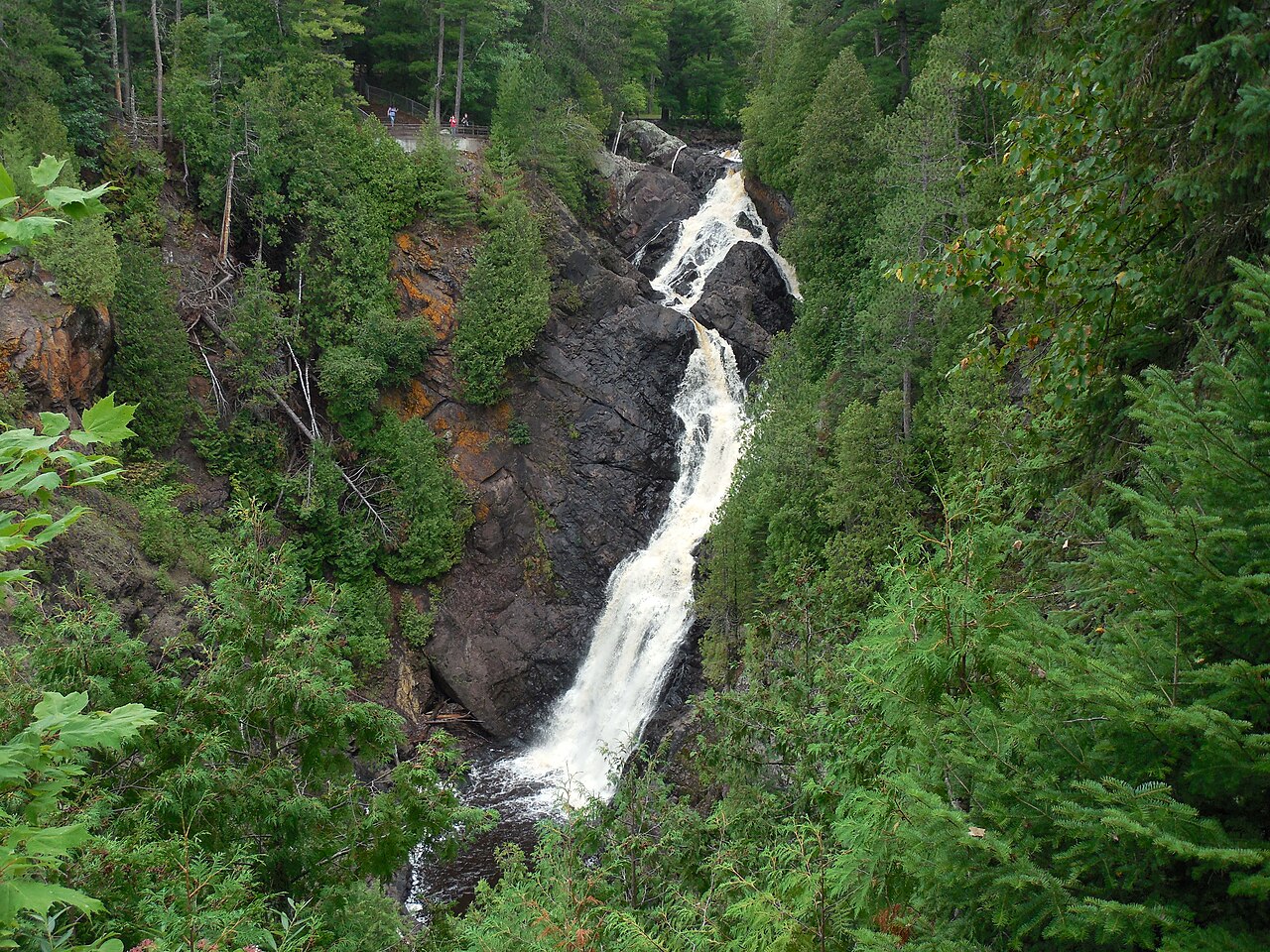
Big Manitou Falls is the headliner and the obvious place to start. At roughly 165 feet, it is the tallest waterfall in Wisconsin, where the Black River plunges through a dark gorge inside Pattison State Park, about 13 miles south of Superior near the town of Superior. Documentation also ranks it among the highest waterfalls east of the Rocky Mountains. Reaching it is genuinely easy: a short walk of about half a mile on graded, mostly accessible trail leads to fenced overlooks above and across the gorge. It is best in spring, when snowmelt drives the full volume of the Black River over the lip, but the sheer height makes it worth the stop in any season.
Copper Falls State Park near Mellen is the densest concentration of scenery in the north, packing two named falls and a run of cascades into one compact loop. The Doughboys Trail, a roughly 1.7-mile self-guided loop, threads the rugged gorges of the Bad River and Tyler Fork past observation decks. Brownstone Falls is a plunge of about 30 feet where Tyler Fork drops over dark volcanic rock into the Bad River gorge; it shows best in spring and after rain. Copper Falls itself, a block-type fall of about 29 feet on the Bad River, photographs beautifully in fall when the hardwoods turn — which is why autumn, not spring, is often cited as its best season. Much of the eastern half of the loop is graded for wheelchairs, though a portion closes in winter for safety.
Amnicon Falls State Park near South Range, southeast of Superior, is a different and gentler experience. Here the Amnicon River splits and steps down through a series of modest falls and rapids over red sandstone, rather than dropping in one big plunge. The documented features run roughly 15 to 20 feet each, reached by short walks of well under a mile from the parking areas, with several falls visible in a single loop of two to three miles if you want the full circuit. A historic covered bowstring-truss footbridge crosses the river between the falls, making this one of the more photogenic and family-friendly stops in the state. As with the rest of the north, spring snowmelt is when the river runs full.
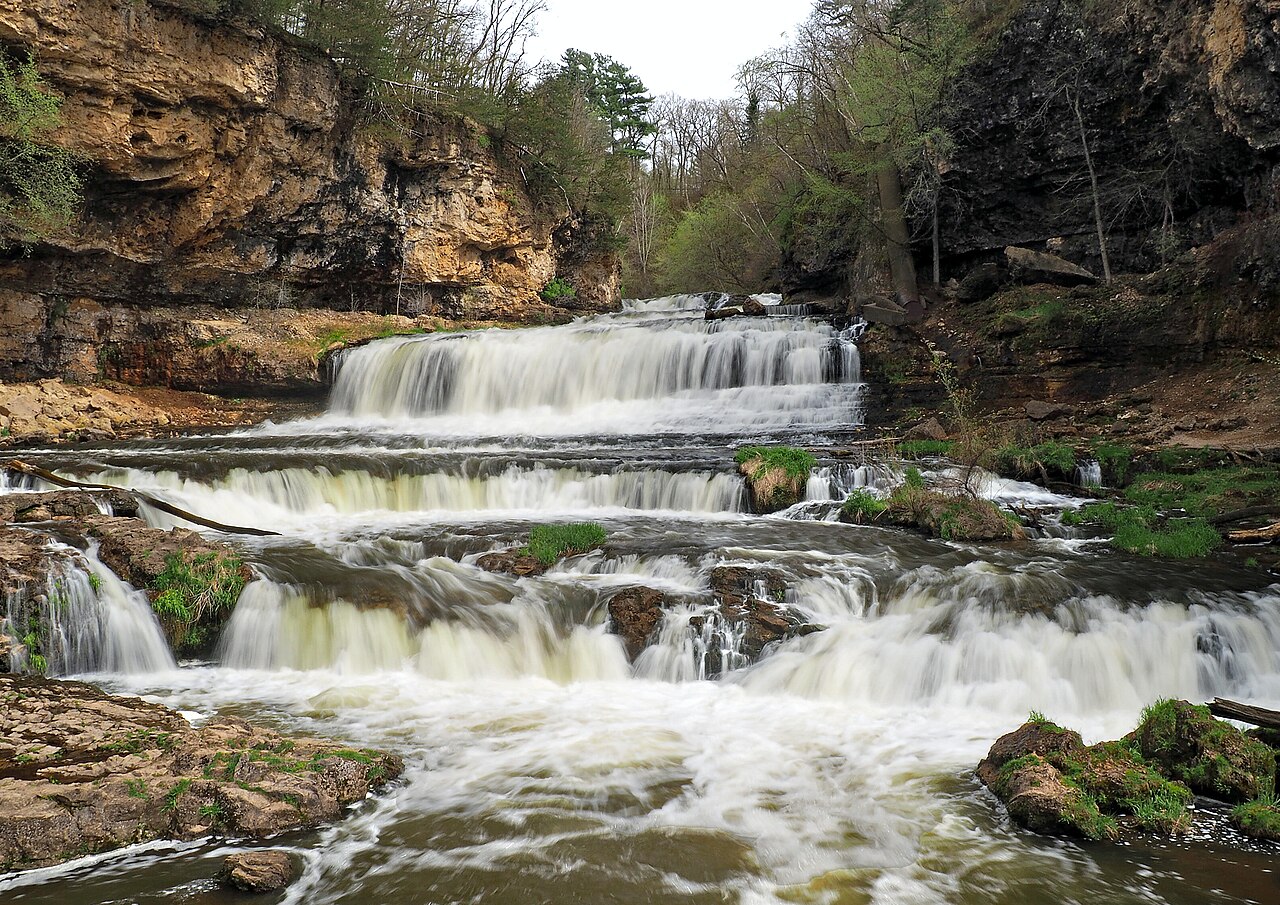
Two more northern falls round out a serious itinerary. Morgan Falls, in the Chequamegon-Nicolet National Forest near Mellen, is a horsetail of about 70 feet — water sliding down a near-vertical granite face rather than free-falling — reached by a moderate hike of roughly 1.2 miles through the forest. It runs best in spring and can shrink noticeably in dry late summer. Farther southwest, Willow Falls inside Willow River State Park near Hudson is a powerful 45-foot cascade in a deep gorge, the centerpiece of the park. Reaching it takes a moderate effort: the most-documented routes range from a short, steep shortcut trail to a longer riverside approach, with the falls best between April and June at peak snowmelt.
The Northeast: Marinette County's Waterfall Cluster
Marinette County calls itself the Waterfalls Capital of Wisconsin, and it has the inventory to back the slogan. Several county parks are built around a single named falls, and because they share a watershed and a region, you can string a few together in one day. A useful quirk of the system: pay the daily vehicle fee at one Marinette County park and you can visit the others that same day at no additional charge, which makes a waterfall loop here unusually efficient.
Long Slide Falls, in its own county park near Pembine, is the showpiece of the group and one of the steepest falls in the area. The Pemebonwon River shoots about 50 feet down a slide of granite outcroppings in a narrow gorge framed by cedar and maple — a true slide rather than a clean plunge, which is exactly how the cascade type reads on the ground. Access is short and easy: a path of roughly a quarter to a third of a mile from the picnic area at the end of the park road reaches the viewing area in well under ten minutes, with one steep spot. Spring is the standout season.
Dave's Falls County Park near Amberg sits on the Pike River and centers on a cascade of about 10 feet where the water drops and channels through a rocky chute. It is reached by a short hike of about 0.6 miles, rated moderate for its footing, and is a popular, accessible stop on a Marinette loop. Spring is again the best time, when the Pike runs high.
Twelve Foot Falls County Park near Dunbar is the most casual stop of the three. On the North Branch of the Pike River, the falls drop a documented twelve feet in a block over the ledge, essentially roadside, with only a short walk of about 0.3 miles from the parking area. The modest height makes it a swimming-hole favorite in summer, but like the others it carries the most water in spring. Together, Long Slide, Dave's, and Twelve Foot make a clean half-day circuit through the heart of Marinette County's falls country.
Smaller Falls and a Town-Park Surprise
Not every worthwhile Wisconsin waterfall is in a remote forest. Cascade Falls in the village of Osceola, on the St. Croix River side of the state, drops about 25 feet on Osceola Creek essentially within the town itself, managed by the village. A staircase descends from the historic downtown to the base of the falls and continues toward the St. Croix, making this one of the easiest falls in the state to reach — no real trail mileage required, just steps down from street level. It runs best in spring.
The Amnicon and Copper Falls parks both reward visitors willing to walk a slightly longer loop, because the named headline falls are only part of the show. At Amnicon, the upper and lower falls plus the river's braided rapids mean you are rarely more than a few minutes from moving water along the circuit. At Copper Falls, the Tyler Fork cascades between Brownstone and Copper Falls are arguably as scenic as the named drops themselves. Budgeting the full 1.7-mile Doughboys loop rather than rushing to a single overlook is the difference between a photo stop and an actual hike.
It is worth being explicit that this list is curated, not complete. Wisconsin has dozens of additional documented and unofficial falls — more Marinette County parks, smaller Lake Superior tributary drops, and seasonal cascades that only appear after heavy rain. The falls featured here were chosen because they are publicly accessible, documented by a land manager or established waterfall database, and genuinely worth a deliberate trip. If you fall in love with the format, the Marinette County parks system and the northern state parks are the right rabbit holes to go down next.
Planning a Wisconsin Waterfall Trip
Timing is the single most important decision. For maximum volume across nearly every falls on this list, target April through June, when northern snowmelt is feeding the Black, Bad, Amnicon, Pike, and Pemebonwon rivers. The exception worth noting is Copper Falls, which many sources flag as a fall destination because the surrounding hardwood color peaks in autumn even as flow drops. After a heavy summer rain, the plunge-type falls like Brownstone recover quickly and are worth chasing within a day or two of the storm.
Group your stops by region, because Wisconsin's falls do not spread evenly across the map. A Lake Superior trip can reasonably combine Pattison (Big Manitou), Amnicon, and Copper Falls parks, with Morgan Falls added if you want a forest hike near Mellen. A separate northeastern trip built around Marinette County can chain Long Slide, Dave's, and Twelve Foot Falls in a single day using the shared daily-fee pass. Willow Falls and Cascade Falls sit on the western edge near Hudson and Osceola and pair more naturally with a Twin Cities-area visit than with the northern parks.
Match the hike to your party. The roadside and short-walk falls — Big Manitou's half-mile overlook trail, Twelve Foot Falls, Long Slide, the Osceola staircase — are doable with kids and people who do not want a real hike. Morgan Falls and Willow Falls are the moderate efforts on this list, with longer or steeper approaches, and Copper Falls' loop, while not strenuous, involves rock stairs that close seasonally for ice. Always check the relevant state-park or county-park page for current trail status before you drive, and remember that state parks require a Wisconsin vehicle admission sticker while Marinette County parks charge their own daily fee.
Finally, respect the gorges. Several of these falls — Big Manitou, Willow, Brownstone — sit at the top of deep, fenced drops where the documented danger is real and people have been hurt leaving the overlooks. The viewing platforms exist for a reason, and the photographs from them are better than the ones from the edge anyway. Stay behind the railings, keep dogs leashed near the rims, and you will leave with the falls and your trip both intact.