Why New York punches above its weight for waterfalls
Most people associate New York with skyscrapers, but the state quietly holds one of the densest concentrations of named waterfalls in the eastern United States. The reason is geology. Across the Finger Lakes region, glacial meltwater carved deep gorges into layered shale and sandstone, leaving creeks to spill over hard rock ledges in long, stepped descents. Farther east, the Catskill and Adirondack uplands give cold mountain brooks the vertical drop they need to fall freely. The result is a state where a roadside overlook, a fifteen-minute gorge walk, and a strenuous backcountry hike can all end at a serious waterfall.
This guide is a curated selection, not a census. New York has hundreds of named falls in the USGS Geographic Names Information System (GNIS), and many more unnamed seasonal flows. What follows are well-documented waterfalls chosen for a mix of height, scenery, reliable public access, and trail quality — drawn from state-park, state-DEC, and land-trust records. We have grouped them loosely by region and ordered them so you can build a realistic itinerary rather than chase a single number.
A note on heights before we start. Reported waterfall heights vary by source and by what is being measured: a single clean plunge is straightforward, but a long stepped cascade can be measured as one drop or as a cumulative descent over several hundred feet. Where we cite a figure, it reflects documented sources, and we have flagged the cases where the headline number describes a run of cascades rather than one sheer face. Treat the numbers as well-sourced approximations, not survey-grade measurements.
The Adirondack high-drop falls: Roaring Brook and OK Slip
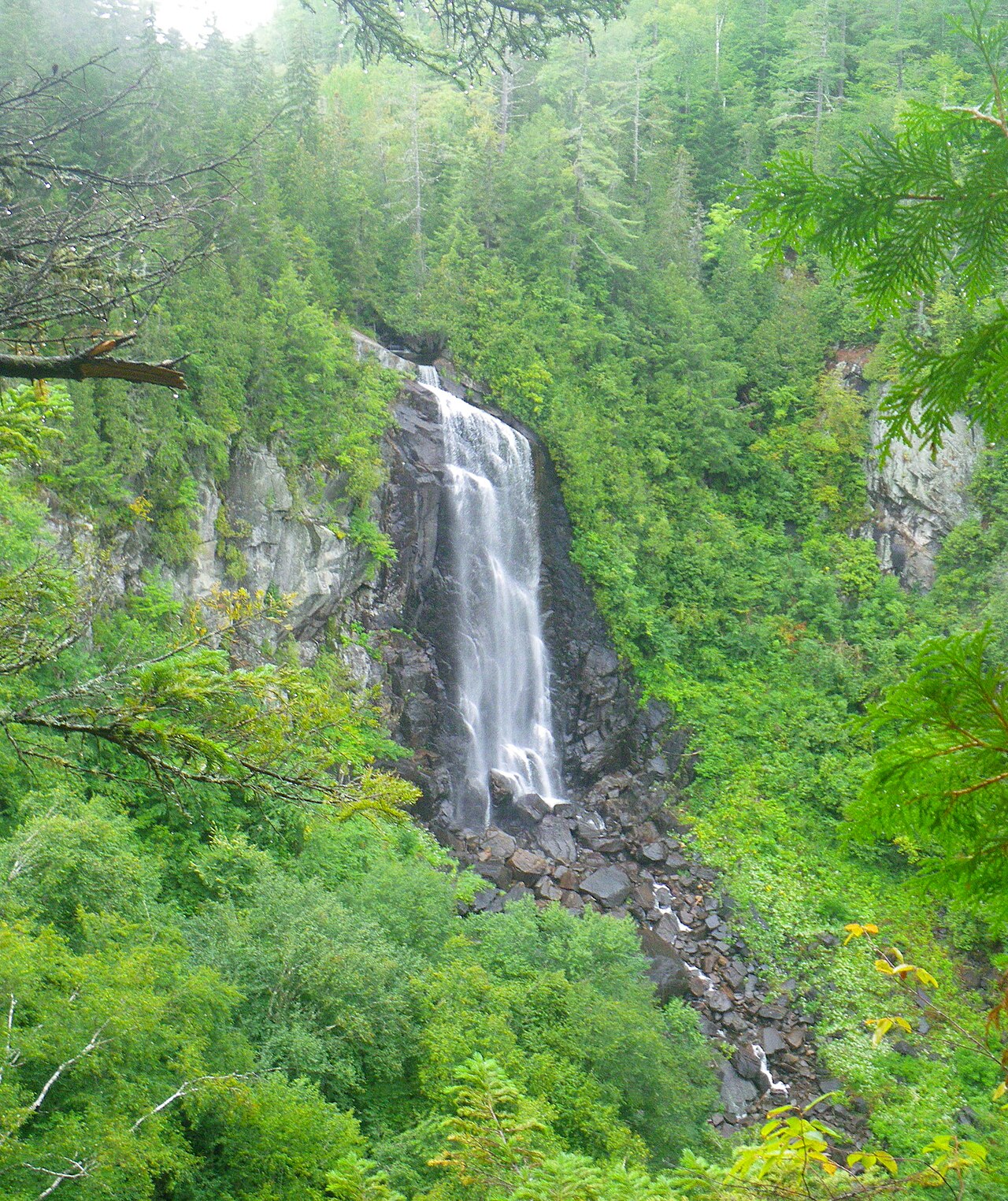
If you want height and wildness, the Adirondacks deliver. Roaring Brook Falls, near Keene Valley, drops a documented 270 feet in tiers down the flank of Giant Mountain, on land managed by the New York State Department of Environmental Conservation within the Giant Mountain Wilderness. It is one of the rare big falls you can reach on an easy, short hike: a brief path from the trailhead brings you to the base, and stronger hikers can continue up toward the top. Because Roaring Brook is a relatively small catchment, it runs best in spring and early summer when snowmelt is feeding it — by late summer the flow can thin considerably.
Deeper in the central Adirondacks, OK Slip Falls is the reward for a real walk. This roughly 250-foot plunge on OK Slip Brook sits within the DEC Forest Preserve near Indian Lake, and it was closed to the public for generations until the surrounding tract was added to the preserve, opening a trail in the 2010s. The hike is about 6.4 miles round trip and rated moderate — long enough to deter casual crowds, gentle enough for a fit day-hiker. You view the falls from an overlook across the ravine rather than at its base, which is part of what keeps the scene feeling untouched. Like Roaring Brook, it is at its most dramatic in spring and early summer high flow.
Both of these are mountain-brook falls, which is the key planning lesson for the Adirondacks: the spectacle is tied to recent rain and snowmelt. A visit in April or May after a wet stretch is a different experience from a dry August afternoon. Carry the usual Forest Preserve essentials, expect no services at the trailheads, and plan your timing around water, not just weather.
The Catskill classic: Kaaterskill Falls
Kaaterskill Falls is arguably the most historically famous waterfall in the state. Tumbling roughly 260 feet in two main tiers on Spruce Creek within Catskill Park, it inspired Hudson River School painters and nineteenth-century tourism long before the modern trail existed. Today it sits under NYSDEC management, and the state has invested in a proper viewing infrastructure: a maintained trail, a viewing platform, and improved parking to manage what had become a dangerous, overcrowded scramble.
The standard approach is a moderate hike of about 1.4 miles to reach the falls, with the gorge trail and platform offering the safest views. The falls run hardest during spring snowmelt, roughly April through June, when the upper Catskills shed their winter. This is also the spot where honesty about safety matters most: Kaaterskill has a long record of serious accidents involving visitors who left marked trails to climb on wet rock above the drops. The documented, sanctioned views are excellent — there is no need to scramble, and the rock around the lip is genuinely lethal when wet.
Because the Catskills are an easy day trip from the Hudson Valley and New York City, Kaaterskill draws crowds on summer and fall weekends. If you want the falls at full volume and the trail to yourself, a weekday in spring is the move.
The Finger Lakes gorges: Taughannock, Ithaca, and Watkins Glen country
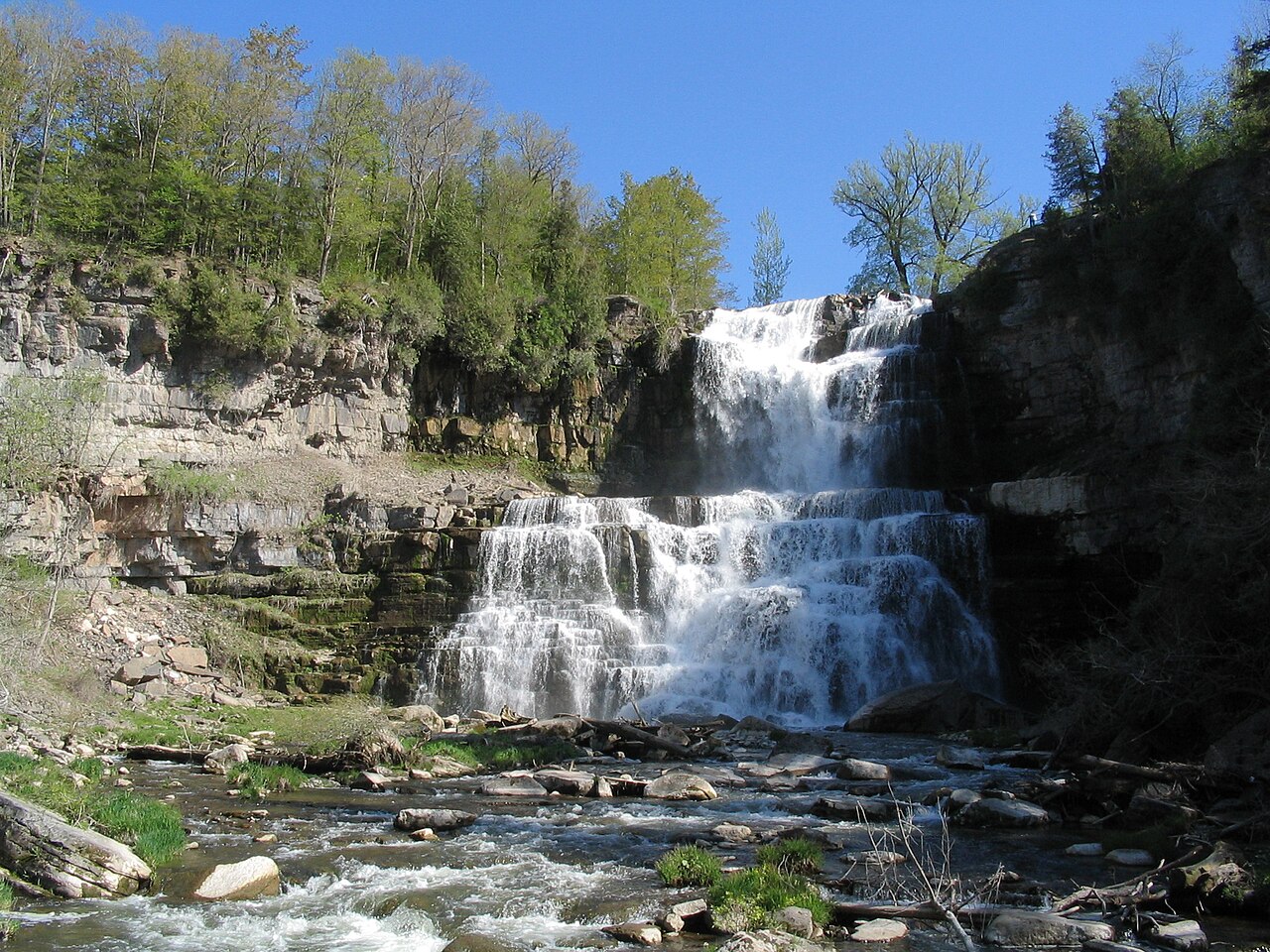
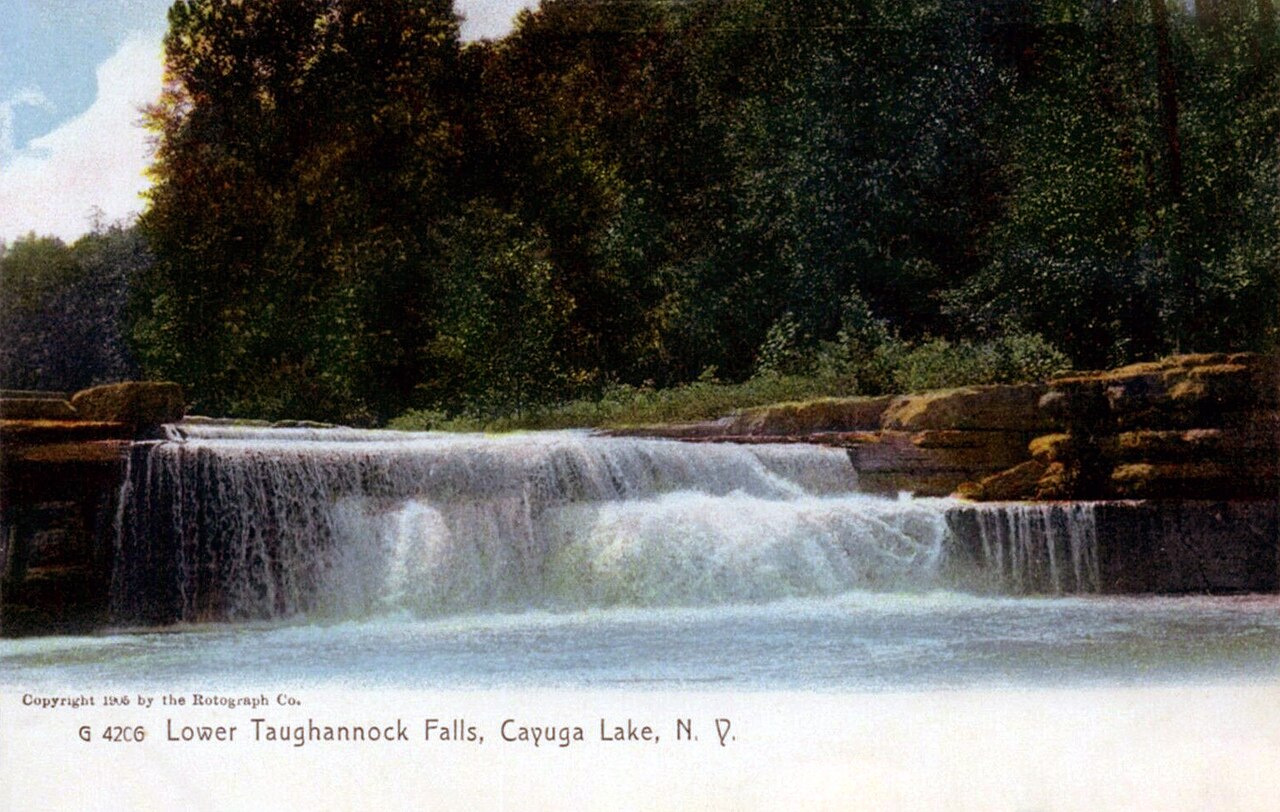
The Finger Lakes are where New York's waterfalls become a genuine destination cluster — you can see several major falls in a single weekend based out of Ithaca. The headliner is Taughannock Falls near Trumansburg, a single 215-foot plunge that drops free of the rock face into a deep amphitheater. It is taller than Niagara by a wide margin, and crucially it is easy to reach: a nearly flat gorge trail of about 1.5 miles leads to a viewing area at the base, making it one of the most accessible big falls anywhere in the Northeast. Managed by Taughannock Falls State Park, it peaks with spring snowmelt from April into June.
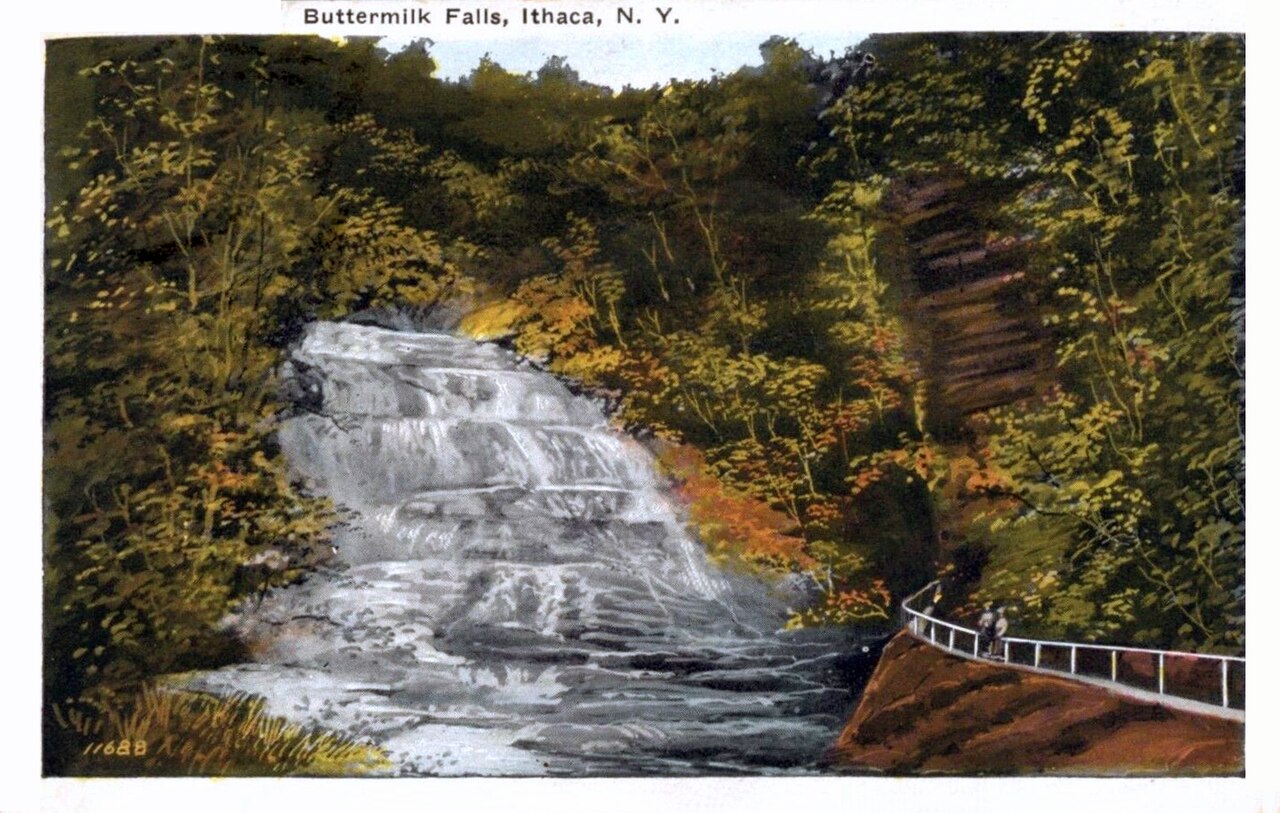
Ithaca itself is ringed by gorge parks. Buttermilk Falls, on Buttermilk Creek just south of town, is a roughly 165-foot cascade that descends in a long staircase of ledges rather than a single drop — the headline height describes the whole run, and the gorge trail of about 1.5 miles climbs alongside it. Nearby, in Robert H. Treman State Park, Enfield Creek produces Lucifer Falls, a striking roughly 115-foot cascade reached on a moderate gorge walk of around 1.1 miles. These state-park gorge trails typically open from spring through late fall — often May through early November — and close in winter when ice makes the stone stairways hazardous.
West of Ithaca, the Watkins Glen area adds Rainbow Falls, an approximately 100-foot cascade on a tributary of Glen Creek where the gorge path passes literally behind and beneath the falling water — one of the most photographed waterfall walks in the state. Smaller but rewarding nearby destinations include Carpenter Falls near Skaneateles, a roughly 90-foot cascade on Bear Swamp Creek reached by a short, easy trail of about 1.1 miles, and Lick Brook Falls near Ithaca, a tiered drop of about 93 feet on land held by the Finger Lakes Land Trust and Cornell University. Lick Brook is the most demanding of this group: roughly 3.6 miles of strenuous hiking, which keeps it quiet even when the state parks are busy.
The Genesee gorge: Letchworth State Park
If the Finger Lakes are a cluster, Letchworth State Park is a single concentrated showcase. Often called the Grand Canyon of the East, the park follows the Genesee River as it cuts a deep gorge and steps down over three major waterfalls. The Middle Falls of the Genesee River is the signature view — a roughly 107-foot wall of water that the river pours over as a wide block, easily seen from overlooks near the historic Glen Iris Inn with little to no walking required. It is the falls most visitors picture when they think of Letchworth, and it runs strong through spring and into the warmer months.
Downstream, the Lower Falls offers a more involved experience. This roughly 70-foot cascade on the Genesee sits in a narrow stretch of gorge, and reaching the classic viewpoint near the stone footbridge involves a moderate walk with stairs — figure on a few miles round trip depending on where you park and how much of the gorge trail you link together. The Lower Falls rewards the effort with intimate, close-in views that the roadside Middle Falls overlooks can't match, and it photographs especially well in spring and fall.
Letchworth's appeal is that it scales to any group. A family with small kids can see the Middle Falls from a paved overlook in ten minutes; a serious hiker can spend a full day stringing together the Upper, Middle, and Lower Falls along the gorge trail. The park is large, well-signed, and managed by New York State Parks, with the strongest water generally running from spring snowmelt through October.
Planning your trip: access, season, and a sensible route
The single most important variable for New York waterfalls is water, and water means season. Almost every fall in this guide peaks with spring snowmelt — broadly April through June — when mountain brooks and gorge creeks are running their hardest. The big-volume river falls at Letchworth hold up better through summer because the Genesee drains a large basin, but the Adirondack brook falls like Roaring Brook and OK Slip can drop dramatically in a dry late summer. If you have flexibility, aim for a few days after a wet spell in spring.
Access ranges from effortless to earned. The Middle Falls of the Genesee is essentially roadside; Taughannock, Roaring Brook, and Carpenter are short, easy walks; Kaaterskill, Buttermilk, Lucifer, Rainbow, and the Lower Falls of Letchworth are moderate gorge or platform hikes of one to three miles; and OK Slip (about 6.4 miles) and Lick Brook (about 3.6 miles, strenuous) are the real hikes of the group. Match the destination to your group honestly — the gorge stairways in the Finger Lakes parks are beautiful but unforgiving for anyone with mobility limits.
Two safety and stewardship points apply everywhere. First, wet rock at the lip of a waterfall is the most dangerous ground you will encounter; the documented, sanctioned overlooks exist precisely because off-trail scrambling has killed people at falls like Kaaterskill. Stay on marked trails and behind railings. Second, the gorge-trail parks (Treman, Buttermilk, Watkins Glen, and the Letchworth gorge routes) generally operate seasonally — commonly May through early November — and close their trails in winter for ice, so confirm hours with the managing agency before you drive. A reasonable two-base itinerary is Ithaca for the Finger Lakes cluster plus Letchworth to the west, with the Catskills and Adirondacks as separate trips on their own weekends.